“What parable can I use to explain it? Consider a mustard seed. When scattered on the ground, it’s the smallest of all the seeds on the earth; but when it is planted, it grows and becomes the largest of all vegetable plants.” Mark 4:30-32. Respectfully I beg to differ with Jesus.
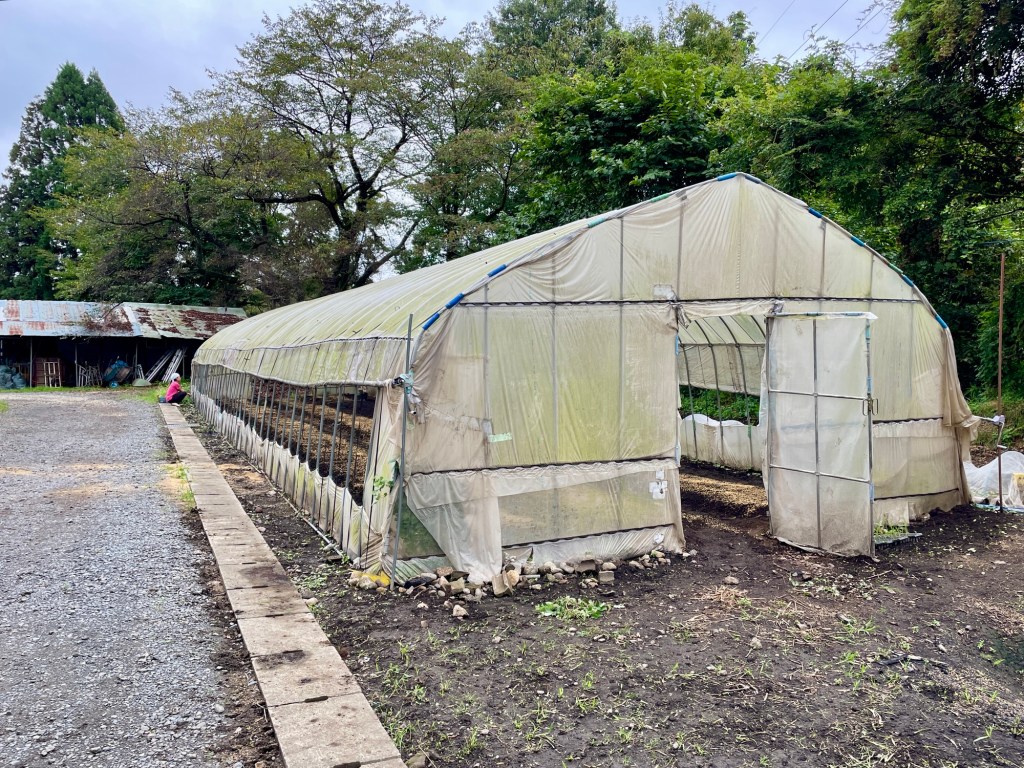
This past week the Farm team planted onion seeds in the greenhouse.
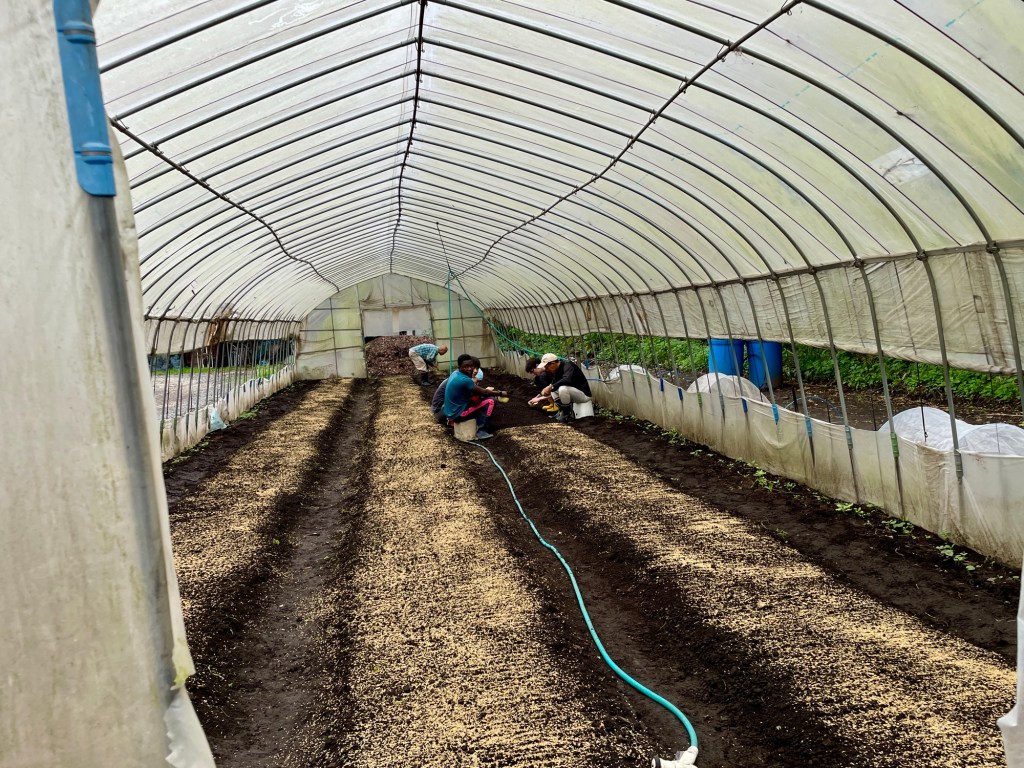
The greenhouse at ARI. Inside the greenhouse. The yellow sections have been planted and are covered in rice chaff for protection.
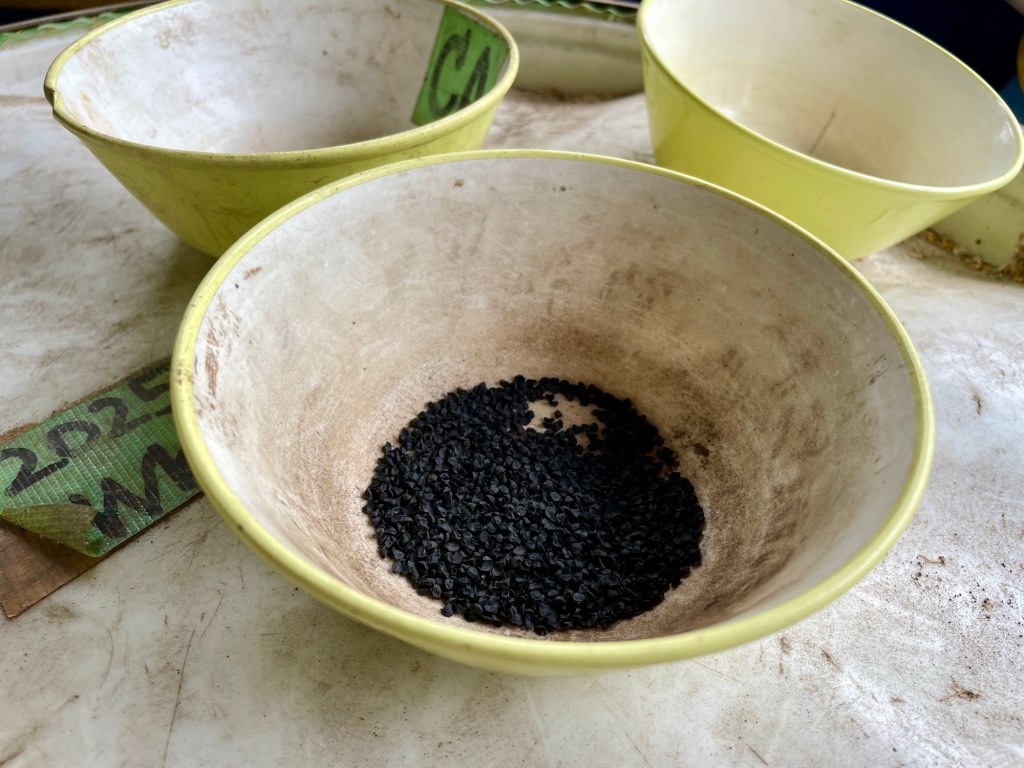
Onion seeds are incredibly small and triangular. (If you have had an onion bagel that had small black seeds in top, those are the onion seeds.)
A bowl of onion 🧅 seeds.
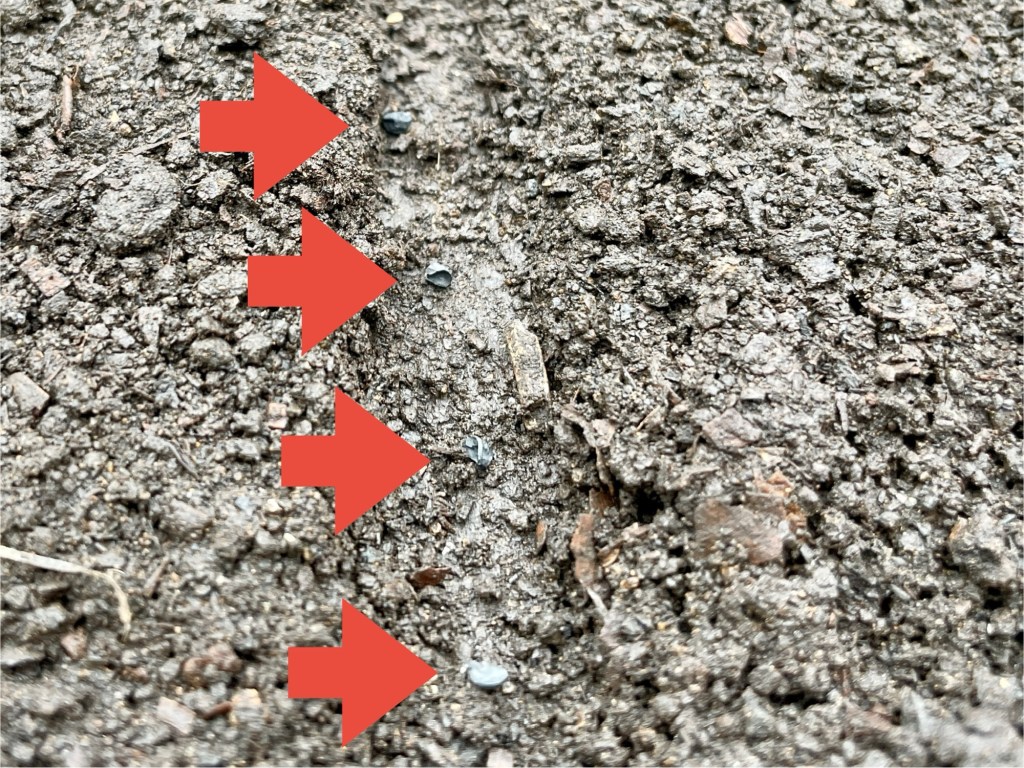
We plant the seeds one at a time by placing them one centimeter apart in rows spaced 8 centimeters apart. See if you can find them in the pictures below.
Here is a row of planted onion seeds. Can you spot them?Here is a slightly closer view showing four seeds.
We then lightly cover the seeds with dirt. It is tedious work.
Planting the last section. A group of volunteers hard at work planting onion seeds. This group of volunteers includes a woman from the US, a Japanese priest, a missionary from Togo, an organic farmer from Canada, and a German student in gap year.The finished product hanging around outside the kitchen. We eat a lot of onions at ARI.
You would not be wrong to say that Nishinasuno is off the beaten path. But do not ever underestimate American commerce, because the main drag has both a McDonald’s and a Starbucks. This drizzly Saturday afternoon we made a trip to the latter, a 45-minute walk into town from ARI.
Our objective was not coffee. Instead we were in pursuit of coffee mugs. We had a two-fold purpose.
Practically, we wanted our own mugs for morning (instant) coffee in our room. The ARI day starts with morning exercise at 6:30 (see the Radio Taiso post) but breakfast is not until 8:30, and that is long time after awakening to wait for a caffeine injection. And the single kettle of (instant) coffee at breakfast does not last long among the 60 or so people. So first thing each morning we go downstairs to the community kitchen and heat water in the electric kettle to make (instant) coffee in random mugs from the shelf. It does the job, barely.
But our primary purpose was, simply, collectibles. We collect Starbucks mugs. But not just any mugs. We collect mugs that commemorate the places we have traveled. Originally Starbucks called them City Mugs. Then they were the You Are There mugs. Now they are called the Been There Series. But whatever they are called, crucially, they are all the same size. Well, in the early days there was some wide variation until Starbucks settled on the current dimensions. So they stack well in the cupboard. And we have an entire cupboard. Maybe 50 in all, maybe more, we are not sure because our daughter absconded with some a few years ago. They come from Beijing to Berlin, Chicago to Santiago, Chile, and everywhere in between. When we are home we use these mugs daily and are reminded of our visits to those places.
Today we hit the jackpot. The Nishinasuno Starbucks had three different mugs – spring Japan, autumn Japan, and Tochigi. Tochigi prefecture is the Japanese “state” where we are living. Scott gasped when he saw the Tochigi mug. We got the last one on the shelf – either Tochigi mugs sell like hotcakes or they could not move the last one. Most likely the latter. We got the autumn version of the Japan mug because we will be here through the season.
Autumn JapanThe rare Tochigi mug made Scott happy.
But it gets better. While we were making our mug decision a preternaturally friendly staff person brought us two demitasse cups with samples of the seasonal Autumn Blend. Mind you, it had been 23 days since we had a decent cup of coffee, to be blunt about it.
It was magical. The autumnal flavor exploded in our mouths; the caffeine shot through our veins.
So we got two tall coffees and a pumpkin scone. The staff were excited and amazed that we were from the US (remember the beaten path, like the Shinkansen, bypasses Nishinasuno) and that we would be here for another two months. We sincerely promised to return. Later the manager introduced herself and welcomed us. The staff fussed over us when we tried to return our dish ware. And notice in the photo that the server had written on our hand wipes Have a nice day ❤️ and Thank you! 😊❤️
“Sunrise Farm” sounds like a yogurt brand, but at ARI it is an activity. Namely, this week Scott has been in a carrot field at 5AM each morning, where the Farm team is thinning out the carrots.
Sunrise farm. Photo taken at 5:18AM.
Work at ARI is carefully (but to the newcomer, confusingly) assigned among participants, staff, and volunteers. Each ARI volunteer is assigned to two work teams. One work team is a permanent assignment for the during of their stay. The other work team assignment changes monthly.
Chrys’ permanent assignment is a FEAST team that prepares lunch for everyone at ARI (the numbers vary but around 60 each meal) and then does kitchen clean up and maintenance after lunch. Her rotating assignment is the Chicken team. That is exactly what you think. The Chicken team does one work shift in the morning and one in the afternoon.
Scott is permanently assigned to the Farm team. Again, the name explains it all. Ordinarily the Farm team also does a morning and an afternoon shift, but it has been so hot here that the afternoon shift has been moved to “sunrise farm”, which starts at 5AM. His rotating team assignment is a different FEAST team that prepares breakfast and supper for everyone here.
That is how it works during the week. On weekends everyone pulls one Saturday shift with their rotating team. This is, after all, a farm with chores to do every day. So on Saturday Chrys and Scott will do a morning shift at Chickens and FEAST, respectively. All other weekend duties are spread out among everyone (participants, staff, and volunteers) and change each week. As it happens this weekend we both have FEAST breakfast duty on Saturday.