Going to Japan with the Governor

Serving as long-term mission volunteers at ARI. Friendship. Farming. Inspiration.

Stories

  • “You are so nice!”

    In the first weeks we were at ARI, we were sitting on the deck waiting for Morning Gathering when Jeremiyah, from India, came up and said “You are so nice!” Which each of us took as a compliment, of course, but what he really meant was that we were so nice to each other.

    Together on the community board.

    In some ways we were an anomaly at ARI. First, we both were older long-term volunteers who did the full course of farm labor. Shoveling and bagging compost? Check. Harvesting rice? Sure. Feeding and weighing pigs? Oink. Weeding soybean fields? Yup. R-E-S-P-E-C-T. There were a few other volunteers who were about our age, but they only worked in the kitchen or the office.
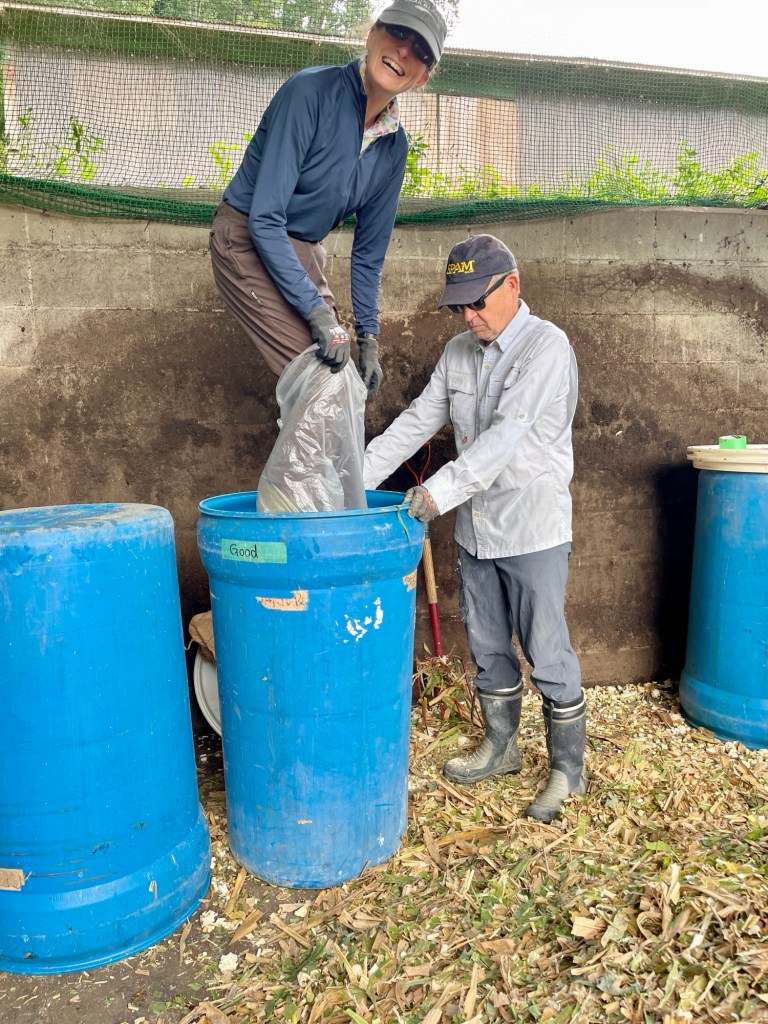
    Stomping silage.

    But what stood out for most people was that we were a married couple. And a happily married couple at that. We always sat together at Morning Gathering and at meals. There is a mealtime routine where someone is selected to say a prayer (or have a moment of silence) before each meal. When one of us was selected, we would hold hands and say our usual mealtime prayer (which we do at home). People loved that.

    We would get comments about how “sweet” we were to each other and questions about how we stayed married for thirty-five years (and counting). Someone even asked if we were newlyweds!

    We say all this not to pat ourselves on the back, but because it made us realize two things. First, we were role models for many of the younger people in the community. We had been told this would be the case, but we did not realize how significant it would be. Second, and more importantly, we realized, “good on us.” It was truly lovely to get that response from the community and be reminded what we had together.

    Gratitude.
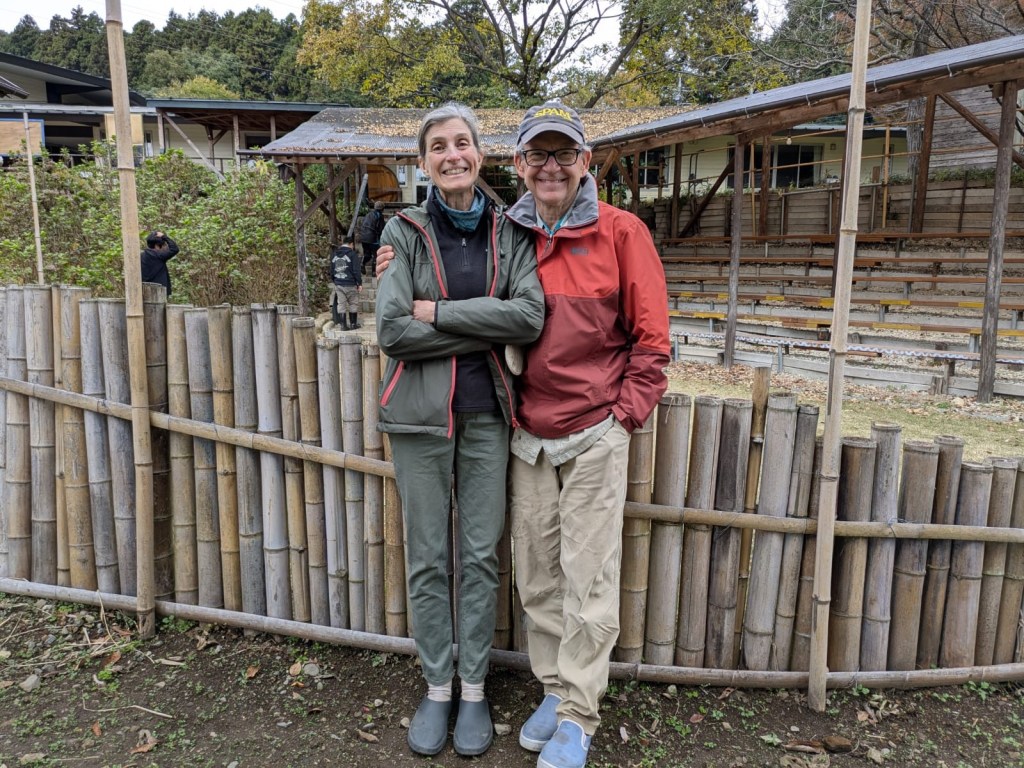
    Our last week. After Morning Gathering.
  • HTC

    Harvest Thanksgiving Celebration (HTC) was the weekend of October 18-19. It is an annual event at ARI. We celebrate the harvest with a party for the local community. About 1,000 people come each day.

    We have not posted about HTC until now because, frankly, we did not want to think about it for a while. It was an all-consuming, exhausting marathon of planning, preparation, and execution.

    It was one of those events where you think it is going to be a train wreck and will never come off, and then God smiles and, miracle of miracles, it all comes off better than anyone could have asked or imagined. At least that is how it felt to us. The weather even cooperated and the rain started literally as we closed up the second day.

    Chrys was on the worship committee, which planned the opening ceremony on Saturday morning and the actual worship service on Sunday morning. She also served as one of two liturgists (Chrys in English and Yuko in Japanese), who introduced speakers and such. Scott got volunteered to be an usher at both events.

    Chrys also pulled shifts at the Language Cafe, where visitors could talk in one of many languages to a member of the ARI community. Chrys did Spanish and native English, but there must have been 20 or so languages available.

    Scott was on the food committee, which planned the dishes that would be served each day. One of the big draws of HTC for the local community is the opportunity to try dishes made by people from around the world.

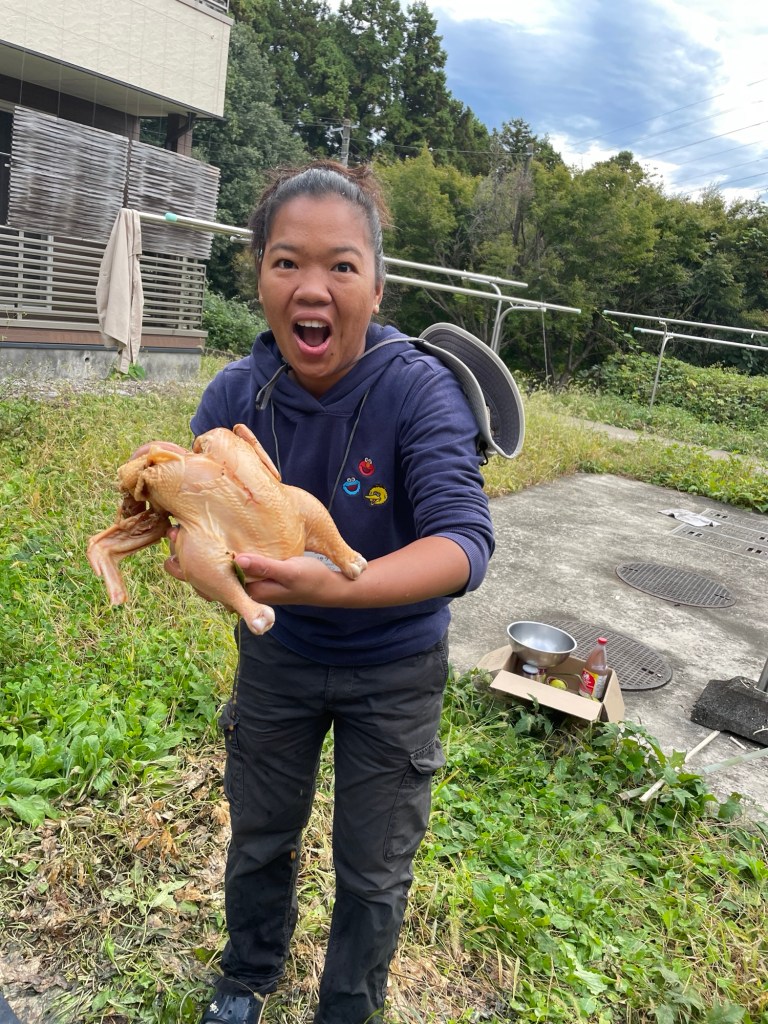
    One of Scott’s jobs before the event was to help butcher 125 chickens (see the earlier post “At Least they Died as Christians”) for the various dishes.

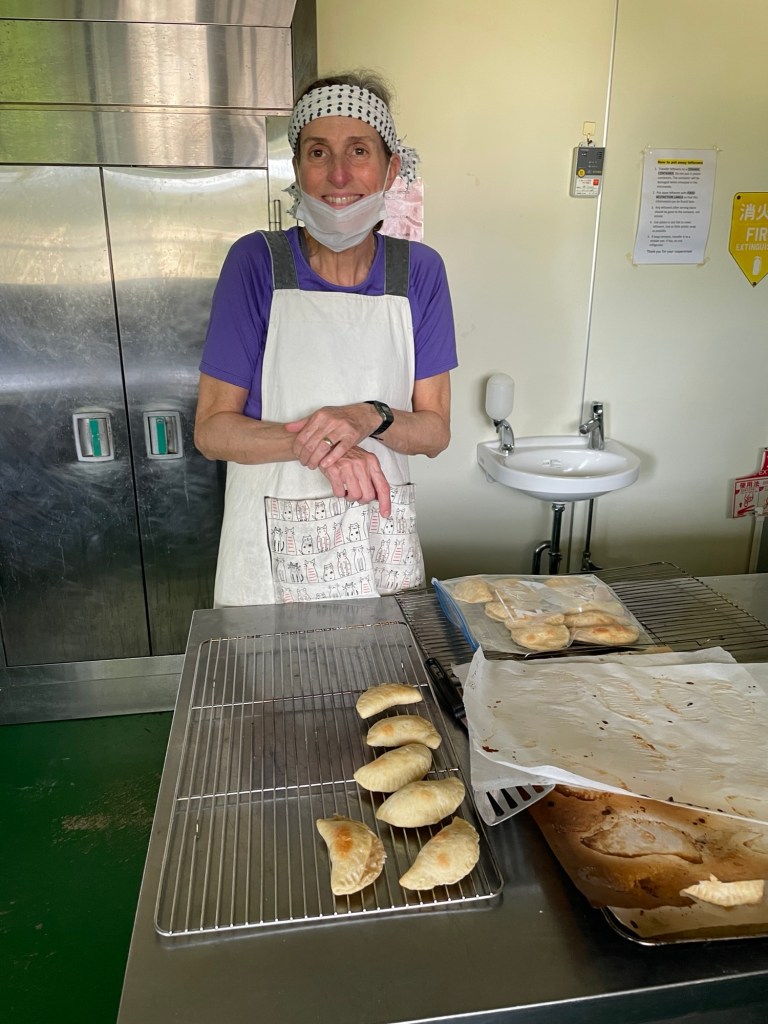
    We also made 140 apple turnovers to sell. It was a lot of work and took us about 5 hours on a Sunday.

    Fresh out of the oven.
    Where the magic happens.

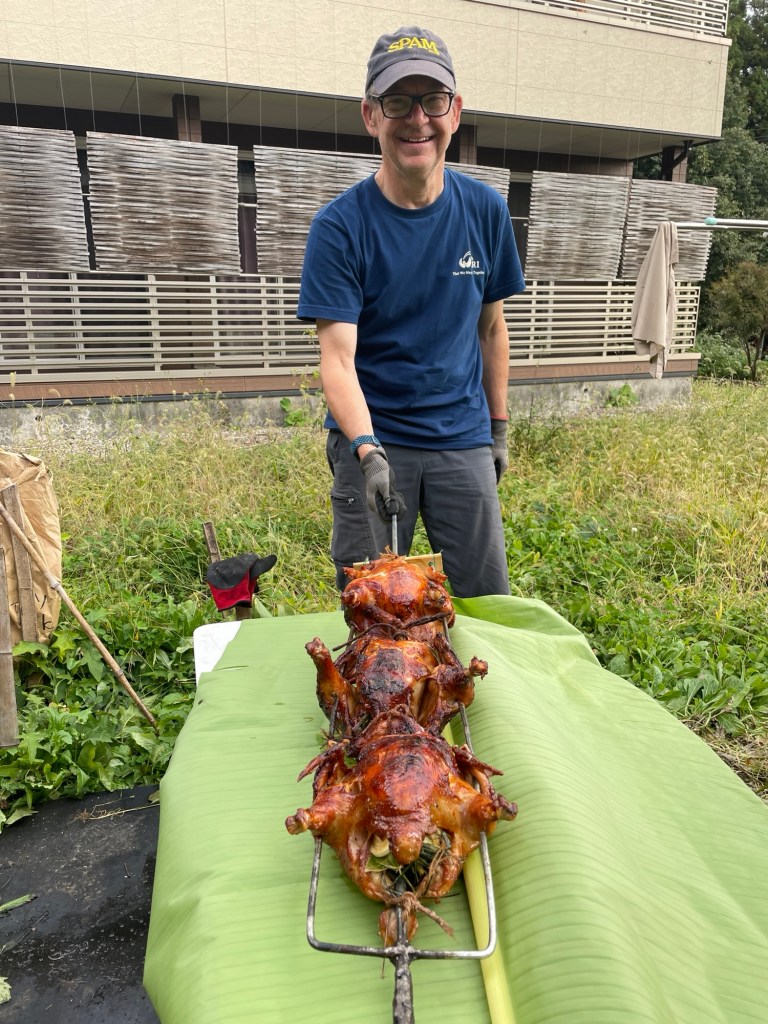
    During the event Scott helped Nick and Sarah (both from the Philippines) gill pork and chicken lechón over an open fire.

    Nick
    Sarah
    The finished product.
    About as much fun as you can have at 7AM on Sunday. We grilled outside the men’s dorm, so we attracted a lot of passersby who lent a hand here and there.

    Besides the food there was a full slate of entertainment by the ARI community – a lot of musical talent, games for the kids – and outside vendors plying all sorts of wares.

    It wears us out just thinking about it again. You can find out more at ARI’s web site.

    https://ari.ac.jp/en/htc-2025/

  • Piglets!

    As we mentioned in the Livestock post, a sow was due any day. We are happy to announce that the ARI community has increased by 11 piglets.

  • Sayonara

    Today we leave ARI. We arrived on September 1.

    Our place on the ARI community board.

    We still have a couple of posts in progress, so continue to watch this space in the coming days.

    The whole gang.

    And at some point we will do a reflection post. It has been a lot to process. As Chrys said during our goodbye announcement at Morning Gathering, we are going home to a place called the “Land of Enchantment”, which means it is a magical place, but we also are leaving a magical place in Japan called ARI.

  • ARI Reading Lists

    The limited connectivity here means that in the evening there is not much to do but read. At home we usually read in the evening, but here we have taken it to a new level. Here is what we read during our time at ARI:

    Chrys

    Slow Horses, Mick Herron (in progress)

    Norwegian Wood (Tokio Blues), Haruki Murakami (en Español)

    Culpability, Bruce Holsinger

    Theft, Abdulrazak Gunah

    Senderos fronterizos, Francisco Jiménez (en Español) (reread)

    The Inheritance of Loss, Kiran Desai

    Scott

    Sense and Sensibility, Jane Austen (in progress)

    Kafka on the Shore, Haruki Murakami (reread)

    The Picture of Dorian Gray, Oscar Wilde (reread)

    The Age of Innocence, Edith Wharton

    The Hobbit, JRR Tolkien (reread)

    Cannery Row, John Steinbeck

    On the Road, Jack Kerouac

    Miracles and Mysteries, Elaine Pagels (reread)

    The Gospel of Mark (reread)

    Poems from collections of Dylan Thomas, Wendell Berry, Billy Collins, Lawrence Ferlinghetti, and Walt Whitman

  • FEAST

    At ARI FEAST means “Food Education and Sustainable Table”. It means food, but more than just eating.

    We take our meals together in Koinonia.

    Koinonia

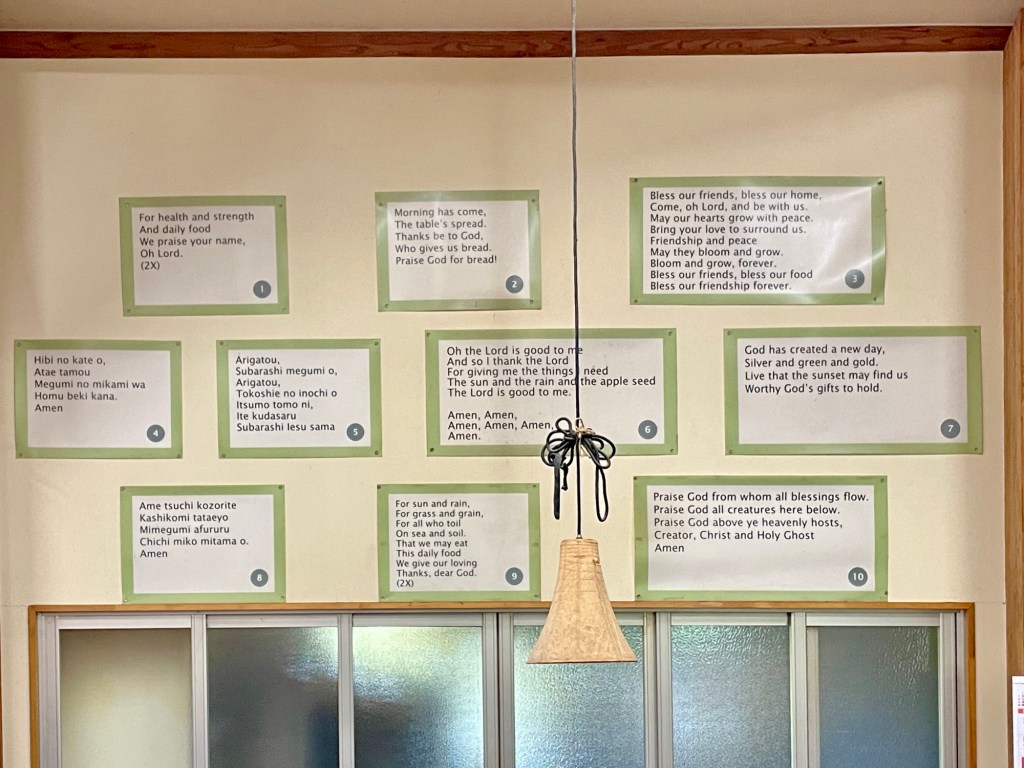
    Before every meal the kitchen leader for that meal (usual the person who made the main dish) introduces the food that has been prepared. We welcome any new people. Then the leader selects someone to lead us in one of ten songs followed by prayer or a moment of silent reflection.

    We sign one of these songs before every meal. They are post on the wall.

    It is one of the many things we do at ARI to nurture our sense of community.

  • Livestock

    ARI has chickens, goats, and pigs. Scott has been assigned to chickens then pigs, while Chrys has been assigned to chickens then goats. This means that during food life work (FLW) each weekday we feed, water, and clean the animals from 7-8AM and 4-5PM. On Saturday we only have FLW in the morning, and the rest of the weekend people are assigned one more FLW slots to spread the work around while ensuring the animals are tended to.

    The goats are pretty much everyone’s favorites. They are kind of cute, relatively clean, and have their own personalities.

    Goats are the GOAT.

    There are only six goats, so they are easy to maintain. They also are the only animals with names (after characters in the movie Frozen). And they provide milk for supper.

    Pigs are next on the list. The small ones also are kind of cute, but they get less cute as they get bigger, and the big ones are kind of scary. The biggest weigh 135kg (about 300 pounds), so get out of the way if they are moving in your direction. We have about 50-60 pigs of all sizes, although that number will change any day because one of the sows is about to have piglets.

    Welcome to the Pig Pen

    And of course they produce a lot of manure. Not so fun. But we use that manure to produce methane gas, compost, and fertilizer, among other things. We also eat a lot of pork at ARI, so thank you pigs.

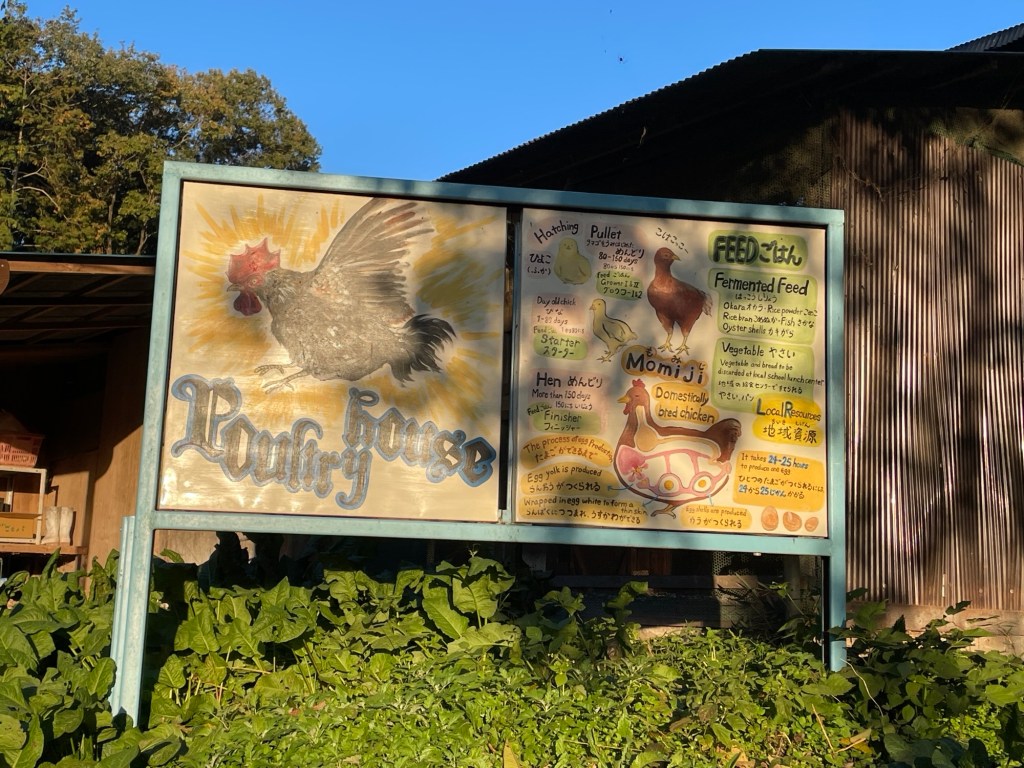
    It is hard have much affection for the chickens. Most of the chickens are “layers” – we eat a lot of their eggs and sell the rest. Fewer are “broilers” – raised for meat. There are about 200 chickens.

    There are two poultry houses.
    Running around like their heads already have been cut off.

    Actually feeding and watering the chickens is not so bad. But the mixing room, where we mix what eventually gets fed to the chickens, is the least appealing spot on the ARI campus. We will not go into any more detail, but here is a video glimpse.

    The dreaded mixing room.
  • Boutique

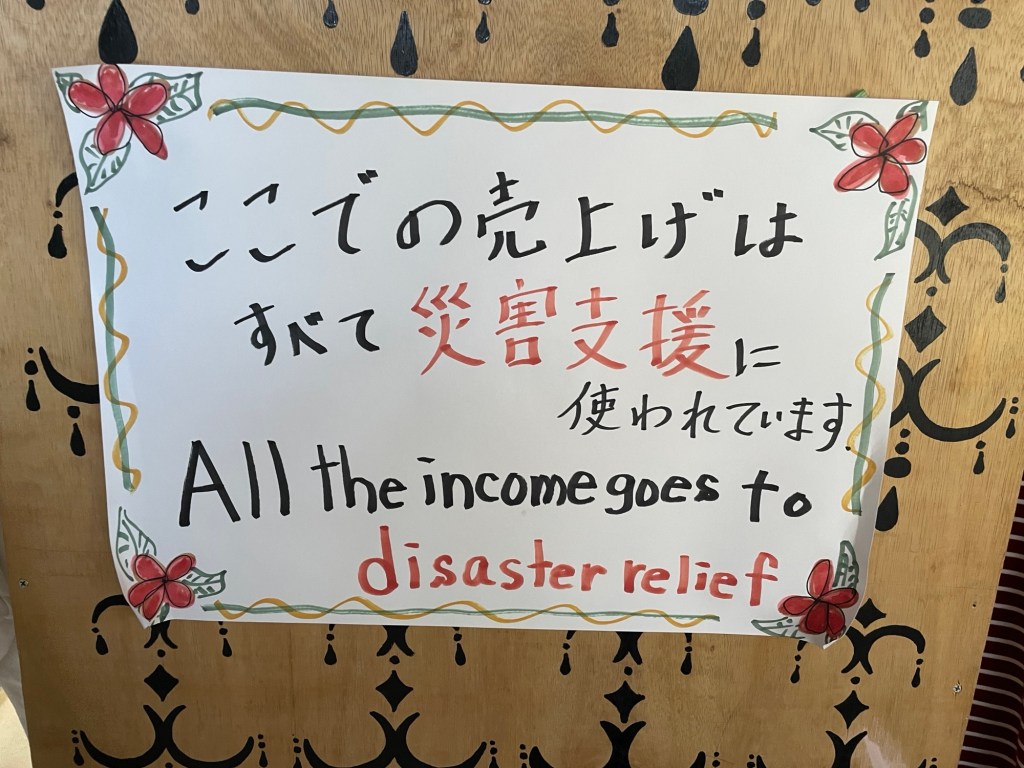
    Boutique is ARI’s second-hand clothing store. It is open for 45 minutes each Thursday. The store offers clothing that has been left behind by prior participants and volunteers or has been donated by businesses and organizations. Pretty much everything costs 100 yen (about 65 US cents).

    ARI fashion.
    Open Thursday 1:00-1:45. Do not be late!

    Participants use it to supplement their wardrobe, as they arrive in early spring and stay until winter, so it is impossible to bring all the necessary clothing. Plus many of them have no cold-weather clothes anyway, because it does not get cold where they live.

    Koffi-san (smiling and gesturing) is Boutique’s “proprietor”. He is a Global Mission Fellow on a 3 year placement through the UMC.

    Everyone uses Boutique to get their first “Japan clothes”. We have chickens, goats, and pigs at ARI, and quarantine rules prohibit working around the livestock in clothes that have not been in the country for at least four months. Recognizing that everyone from outside Japan will need some livestock wardrobe basics, participants and long-term volunteers are given an allowance of five pieces of clothing from Boutique before being charged for everything else.

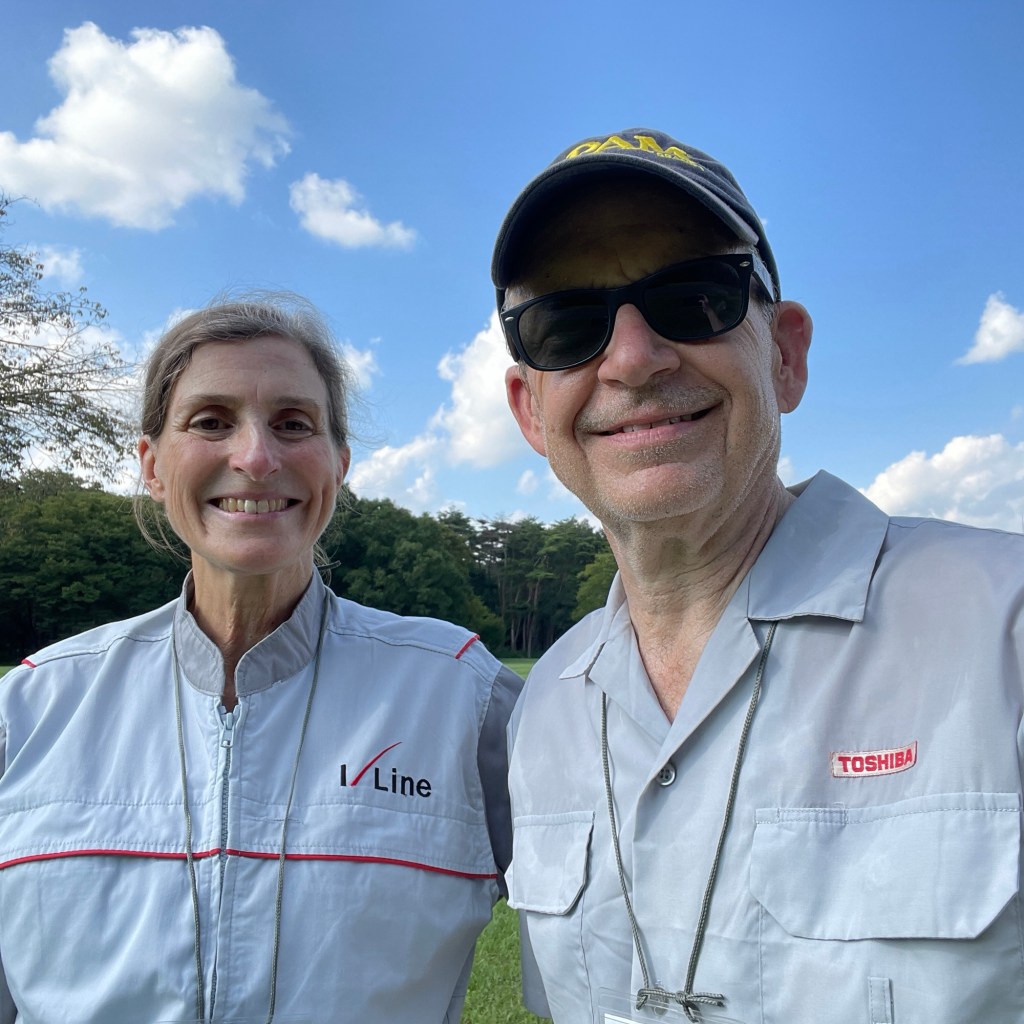
    We snagged some real deals in our first foray to Boutique. In the picture above Chrys is wearing a worker’s shirt from I-Line, which appears to be a defunct company. A lot of people at ARI wear I-Line shirts, hats, and jackets, so the company’s failure must have been a boon for Boutique. Scott is sporting a worker’s shirt from Toshiba, which he thinks is pretty cool.

  • Disconnected

    ARI is an intentional community. One of the ways in which it fosters community is to limit outside distractions, such as TV and the Internet.

    There is no TV on the campus, so you can go weeks without seeing any news or sports or commercials or reality shows. (ARI does get the Japan Times in English and the international edition of the New York Times, so we can read up on the big events.) It is interesting how little we have missed TV, but we are not big TV watchers at home.

    WiFi is available only in the central classroom area (not in the dorms), and it is available only from 5AM to 10PM. The participants are encouraged not to get local SIM cards for data on their phones, but we have observed that many do anyway. We keep our phones in airplane mode, so we only have WiFi connectivity. As we spend our day out on the farm, in effect this means that we only can call our family, check email, get news, and post to Instagram around meal times. And that is when everyone else is doing the same thing, so the connection often is poor. This has been a much bigger issue for us than the lack of TV.

    Keeping connected with our children has been particularly difficult because of the time difference. They are 13 or 14 hours (before or after the end of DST in the US) behind us, so as a practical matter we can only talk with them in the morning here which is the evening there. A call in the one hour during breakfast at 8:30 here is 7:30 or 6:30 the prior evening there. The best day is Sunday here, when we have a longer break after breakfast and before church.

  • Nikko

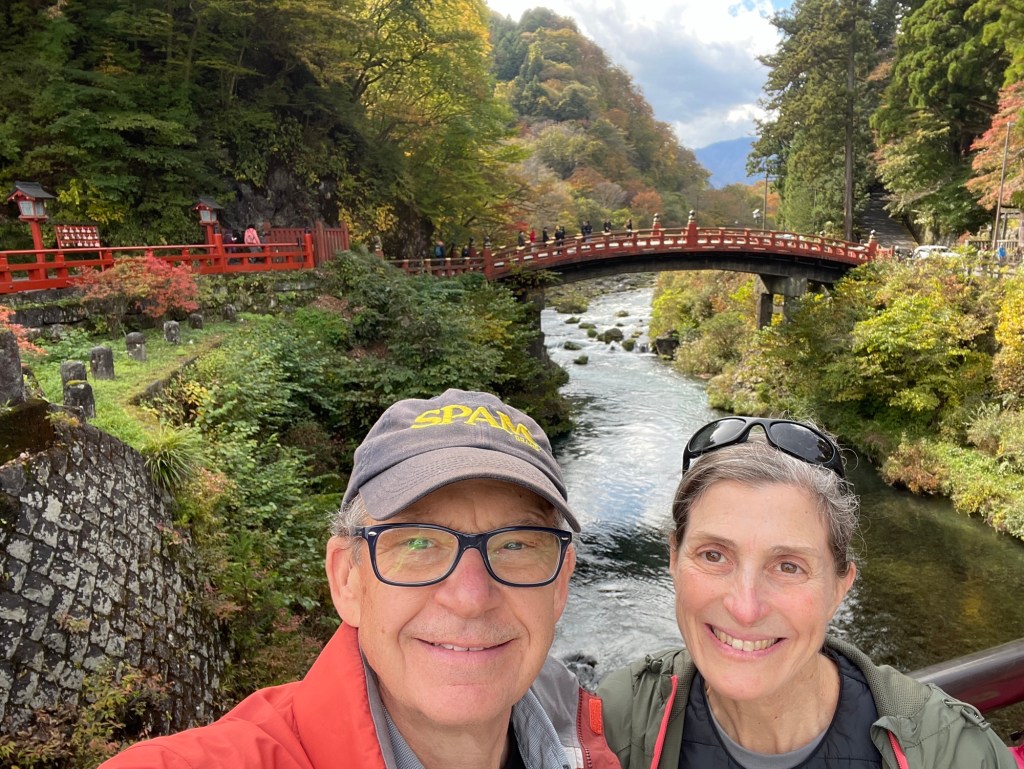
    We took a three-day respite from ARI and visited Nikko National Park. Nikko is known for its temples and shrines on the edge of the village of Nikko (where we stayed)

    Shinkyo bridge
    The area around Nikkō Tōshogū shrine.

    and for the beautiful area around Lake Chuzen-ji. We did run into a bit of weather during our hike.

    Run away!
    Lake Chuzen-ji and Mt. Kantai. And Chrys.
    Kegon Falls

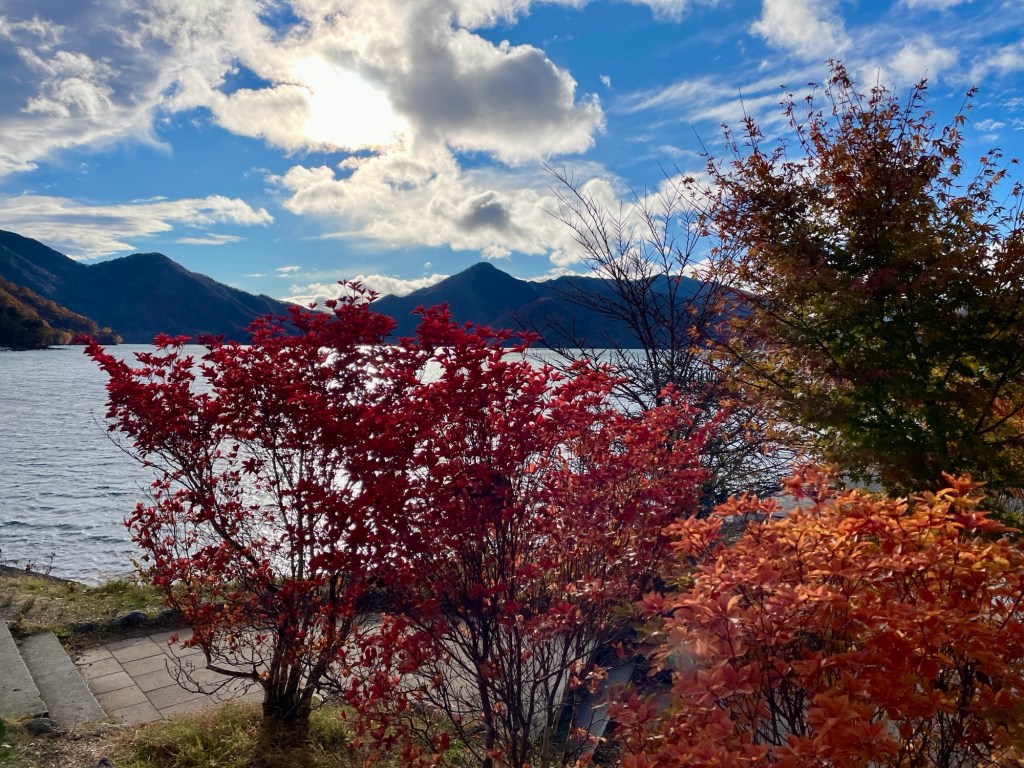
    We visited just a few days after the peak fall colors, but still it was beautiful.

    We rented a car for the drive into the mountains, which added to the adventure – you drive on the left in Japan.