Going to Japan with the Governor

Serving as long-term mission volunteers at ARI. Friendship. Farming. Inspiration.

Category: Food

  • HTC

    Harvest Thanksgiving Celebration (HTC) was the weekend of October 18-19. It is an annual event at ARI. We celebrate the harvest with a party for the local community. About 1,000 people come each day.

    We have not posted about HTC until now because, frankly, we did not want to think about it for a while. It was an all-consuming, exhausting marathon of planning, preparation, and execution.

    It was one of those events where you think it is going to be a train wreck and will never come off, and then God smiles and, miracle of miracles, it all comes off better than anyone could have asked or imagined. At least that is how it felt to us. The weather even cooperated and the rain started literally as we closed up the second day.

    Chrys was on the worship committee, which planned the opening ceremony on Saturday morning and the actual worship service on Sunday morning. She also served as one of two liturgists (Chrys in English and Yuko in Japanese), who introduced speakers and such. Scott got volunteered to be an usher at both events.

    Chrys also pulled shifts at the Language Cafe, where visitors could talk in one of many languages to a member of the ARI community. Chrys did Spanish and native English, but there must have been 20 or so languages available.

    Scott was on the food committee, which planned the dishes that would be served each day. One of the big draws of HTC for the local community is the opportunity to try dishes made by people from around the world.

    One of Scott’s jobs before the event was to help butcher 125 chickens (see the earlier post “At Least they Died as Christians”) for the various dishes.

    We also made 140 apple turnovers to sell. It was a lot of work and took us about 5 hours on a Sunday.
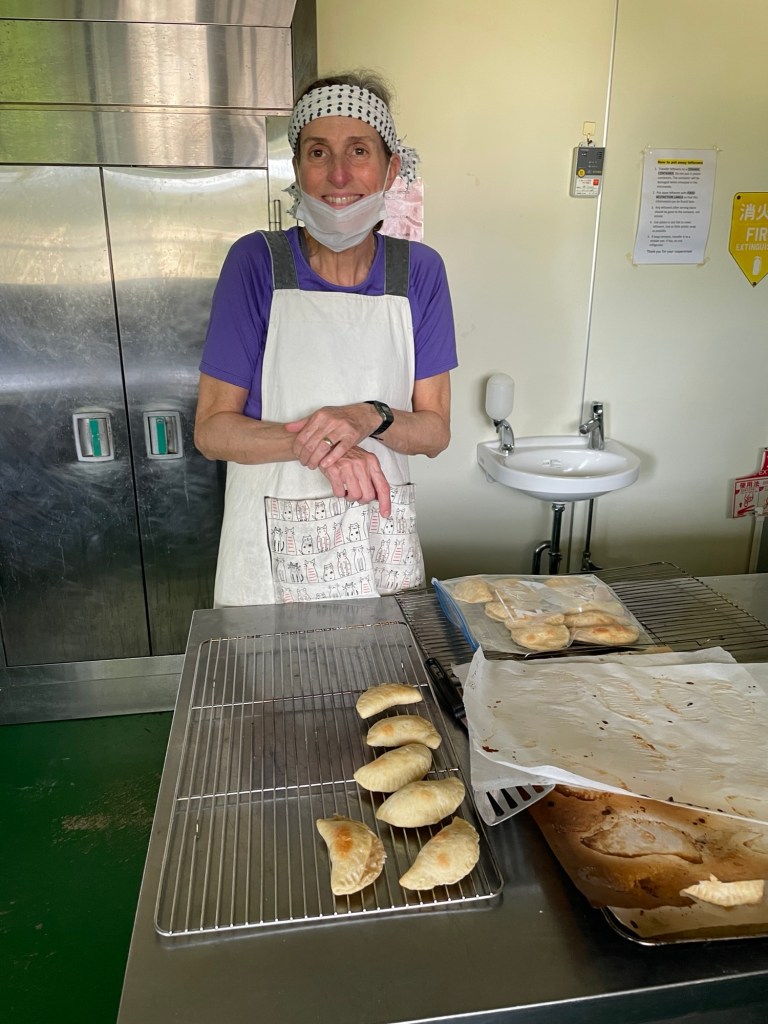
    Fresh out of the oven.
    Where the magic happens.

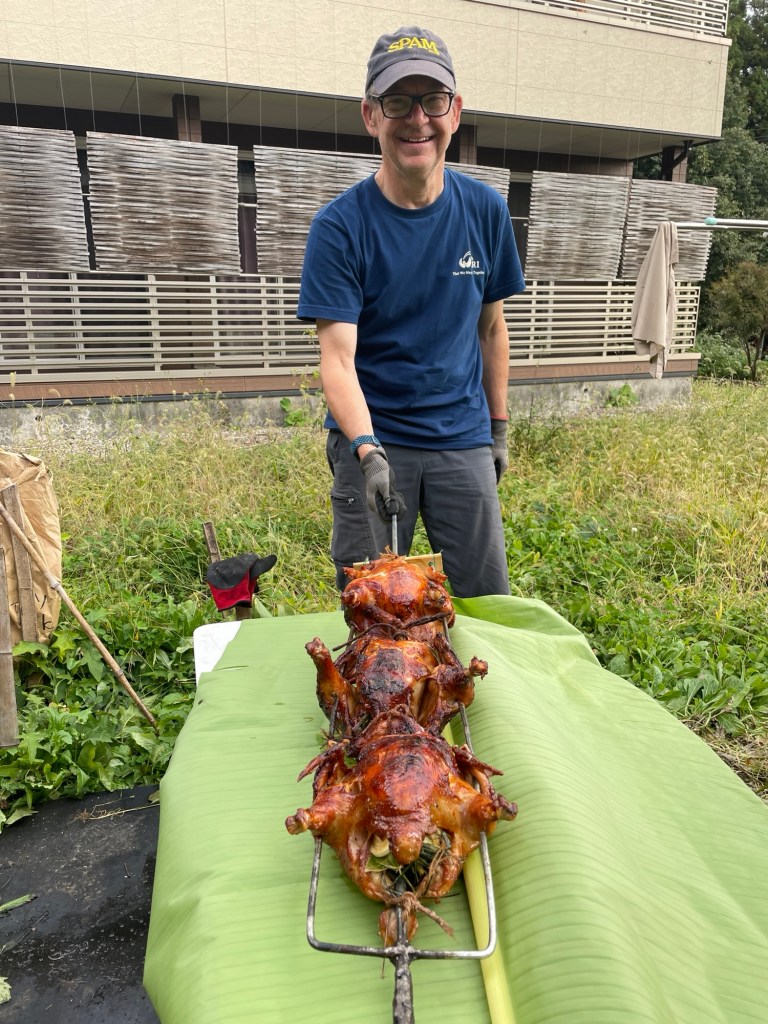
    During the event Scott helped Nick and Sarah (both from the Philippines) gill pork and chicken lechón over an open fire.

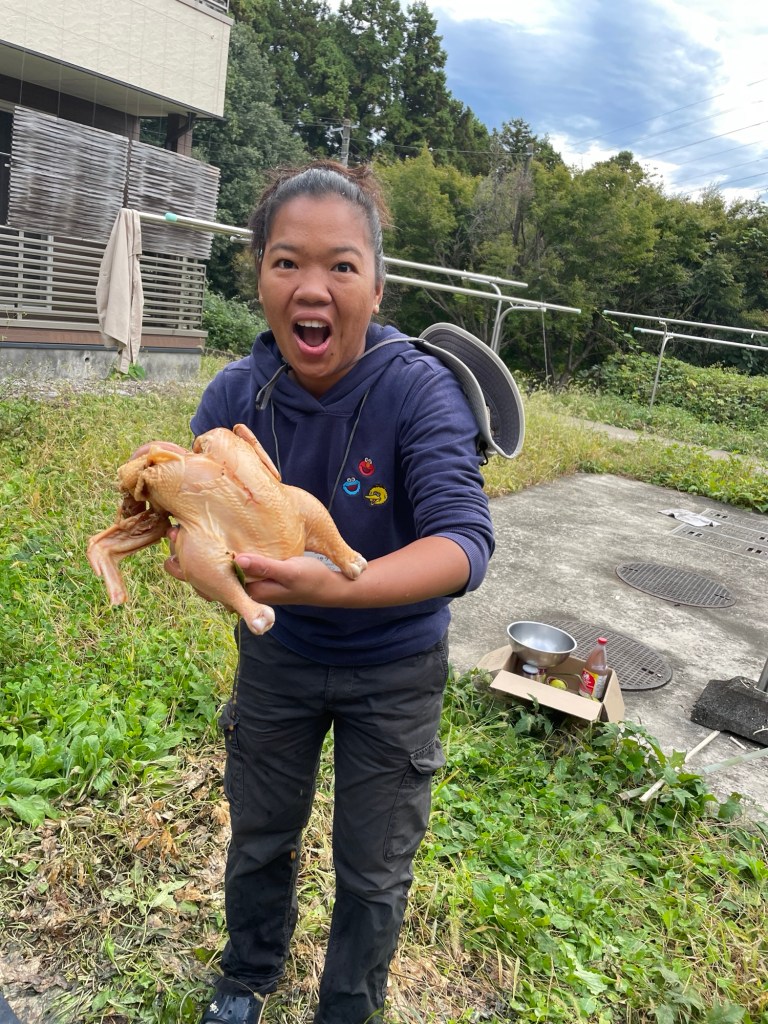
    Nick
    Sarah
    The finished product.
    About as much fun as you can have at 7AM on Sunday. We grilled outside the men’s dorm, so we attracted a lot of passersby who lent a hand here and there.

    Besides the food there was a full slate of entertainment by the ARI community – a lot of musical talent, games for the kids – and outside vendors plying all sorts of wares.

    It wears us out just thinking about it again. You can find out more at ARI’s web site.

    https://ari.ac.jp/en/htc-2025/

  • FEAST

    At ARI FEAST means “Food Education and Sustainable Table”. It means food, but more than just eating.

    We take our meals together in Koinonia.

    Koinonia

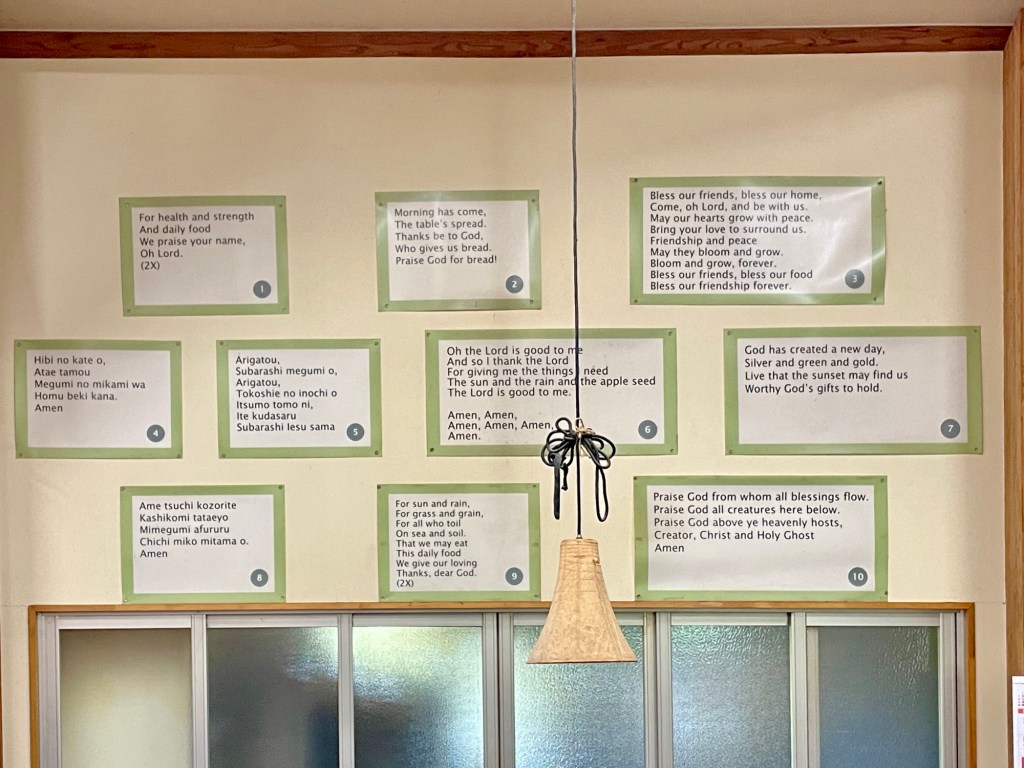
    Before every meal the kitchen leader for that meal (usual the person who made the main dish) introduces the food that has been prepared. We welcome any new people. Then the leader selects someone to lead us in one of ten songs followed by prayer or a moment of silent reflection.

    We sign one of these songs before every meal. They are post on the wall.

    It is one of the many things we do at ARI to nurture our sense of community.

  • Livestock

    ARI has chickens, goats, and pigs. Scott has been assigned to chickens then pigs, while Chrys has been assigned to chickens then goats. This means that during food life work (FLW) each weekday we feed, water, and clean the animals from 7-8AM and 4-5PM. On Saturday we only have FLW in the morning, and the rest of the weekend people are assigned one more FLW slots to spread the work around while ensuring the animals are tended to.

    The goats are pretty much everyone’s favorites. They are kind of cute, relatively clean, and have their own personalities.

    Goats are the GOAT.

    There are only six goats, so they are easy to maintain. They also are the only animals with names (after characters in the movie Frozen). And they provide milk for supper.

    Pigs are next on the list. The small ones also are kind of cute, but they get less cute as they get bigger, and the big ones are kind of scary. The biggest weigh 135kg (about 300 pounds), so get out of the way if they are moving in your direction. We have about 50-60 pigs of all sizes, although that number will change any day because one of the sows is about to have piglets.

    Welcome to the Pig Pen

    And of course they produce a lot of manure. Not so fun. But we use that manure to produce methane gas, compost, and fertilizer, among other things. We also eat a lot of pork at ARI, so thank you pigs.

    It is hard have much affection for the chickens. Most of the chickens are “layers” – we eat a lot of their eggs and sell the rest. Fewer are “broilers” – raised for meat. There are about 200 chickens.

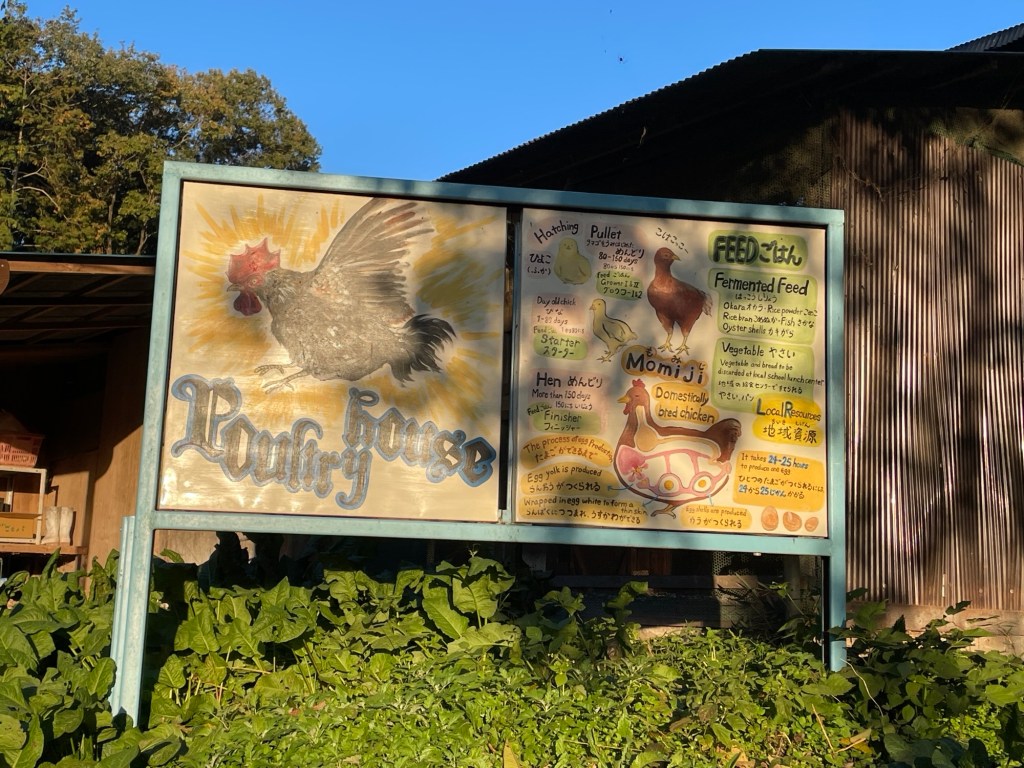
    There are two poultry houses.
    Running around like their heads already have been cut off.

    Actually feeding and watering the chickens is not so bad. But the mixing room, where we mix what eventually gets fed to the chickens, is the least appealing spot on the ARI campus. We will not go into any more detail, but here is a video glimpse.

    The dreaded mixing room.
  • Auto-Sushi

    Today was an ARI holiday so we walked into Nishinasuno for shopping, lunch, and solid WiFi. Mission accomplished on all fronts.

    Yum.

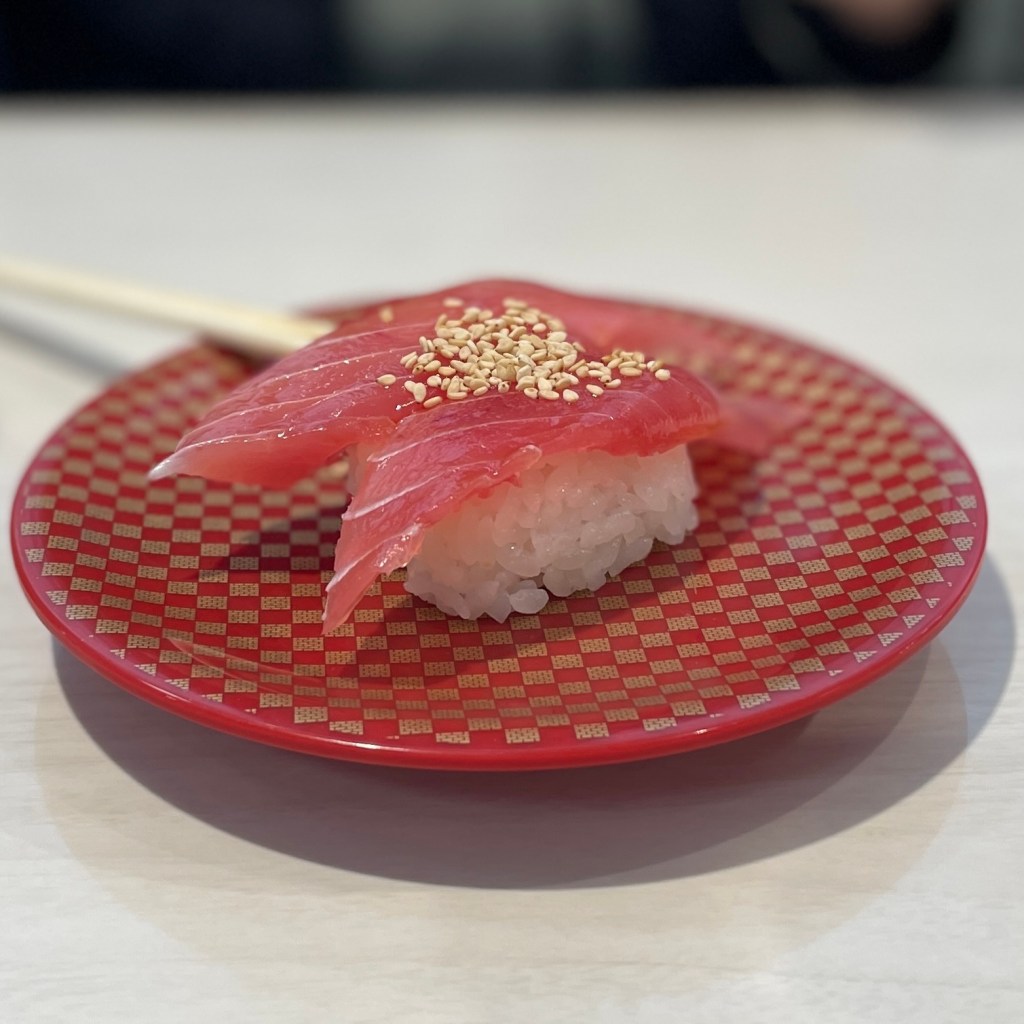
    For lunch we went sushi. About a month ago we had our auto-pizza adventure, and today it was auto-sushi. It was the same process: check in at a kiosk for our table assignment, order from a tablet, and self-pay at another kiosk. The only brief human interaction was the person who brought our beer. Here the food was delivered by carts on tracks that whizzed by your table. Our first item, tuna was delivered by a Shinkansen, while another table’s order went by on another track in a race car.

    Shinkansen sushi.
  • Kanpai!

    The drinking age in Japan is 20. There are beer vending machines on the street.

    Just the thing on a warm and humid Sunday afternoon. In our room, of course.

    But ARI is a religiously and culturally diverse community. No alcohol is permitted in public spaces. We enjoy responsibility and privately.

  • Intermission

    Wednesday was the halfway point of our time at ARI. Sometimes it feels like we have been here a long time and sometimes just a few days. Long-term volunteers (those serving at least two months) get two days off for each month, and this weekend we took two days off to make a four-day holiday.

    We went to Tokyo and from there made a day trip to Mt. Fuji. We stayed in the lively Shinjuku area at a hotel notable for Godzilla climbing on it.

    Our hotel was easy to spot.
    Even the hotel elevators were dangerous.

    We saw two movies at the multiplex in the same building as the hotel – One Battle After Another and Kokuho (with English subtitles). Kokuho is Japan’s submission for Best International Feature Film in the next Academy Awards. 10/10 would recommend both.

    We did a lot of hiking around Mt. Fuji and actually some saw of it at the end of day.

    Mt. Fuji.
    Mt. Fuji is supposed to be a dramatic backdrop but it was clouded over when we visited this pagoda.
    Samurai hiker.

    We did some needed shopping, saw some sights, and ate some good meals.

    Shinjuku Gyoen National Garden
    Nagi ramen shop. Ten seats and a line to get in down the alley.
    Tokyo as far as the eye can see, and much further.

    It was a nice respite, but it also was nice to get back to the quiet country of ARI.

  • “At least they died as Christians ….”

    This morning 75 ARI chickens met their maker. Next week is the annual Harvest Thanksgiving Celebration, or HTC (more on that to come in another post), and the ARI community will be preparing an international menu of food for our guests from the area.

    Scott is on the HTC Food Committee. The committee did the math and determined that all the dishes would require a total of 75 chickens. The committee also decided that October 7 would be Chicken Butchering Day – a day that will long live in Scott’s memory.

    Uncle Timo is in charge of ARI’s chickens. He took charge of slaughtering them, then the committee members took over. There is an ingenious and somewhat terrifying contraption that removes most of the feathers. The rest of the feathers needed to be removed by hand.

    Then the butchering began. Scott had never butchered a chicken, or anything else for that matter. The closest has been carving a Thanksgiving turkey. Fortunately Kenwang was at the next station and showed Scott what to do, then patiently answered his questions as they went along. Scott learned more about chicken anatomy than he ever wanted, to be honest. Off came the head and feet, then out came the innards. We keep the head, feet, and many of the innards. The rest goes into the ARI compost, which itself is a thing to behold.

    We will stop the chicken-deconstruction description there, and mercifully there are no pictures (you are welcome, Joy). There was, however, a film maker who shot video of the whole thing, and frankly it seemed like he took waaaay more video than necessary to show chickens being butchered. But what do we know about film making?

    The whole thing took a couple of hours, including cleanup. You cannot imagine the mess. Then we went to lunch. Lunch was vegetarian (whew).

    Oh, and about the post title. Our chicken wrangler Uncle Timo also is the head of the local Otawara Christian Church (more on that to come in another post). Folks in the butchering room were joking with Uncle Timo about whether he had baptized the chickens (at one point they go into a hot bath) and he joked yes, “at least they died as Christians.”

  • Rice Harvest

    It is rice harvesting season, and last week ARI harvested its six rice paddies. We ended up with 8.6 tons of rice.

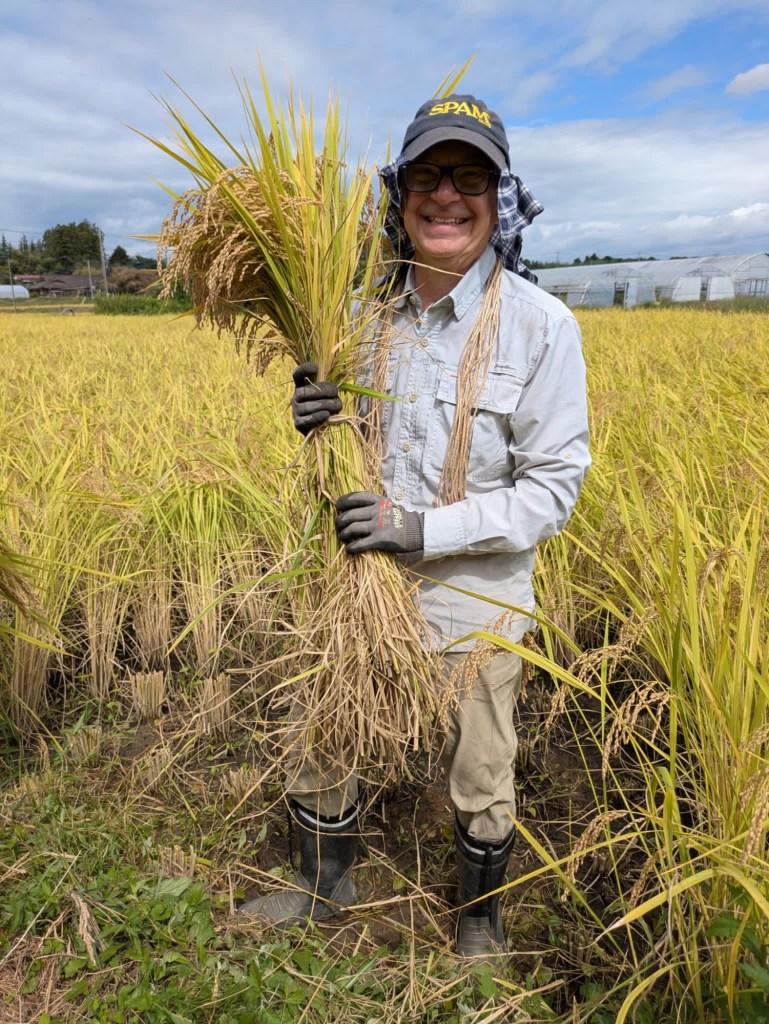
    Chrys displaying some of her work.
    Note the expertly cuts lengths of twine around Scott’s neck.

    The ARI harvesting began on Sunday, and by Thursday five of the paddies had been harvested by machine. These are clever machines that suck rice plants in the front, thresh the grains, and leave the straw.

    This is not ARI’s machine, but was next to one of the ARI soy bean fields.

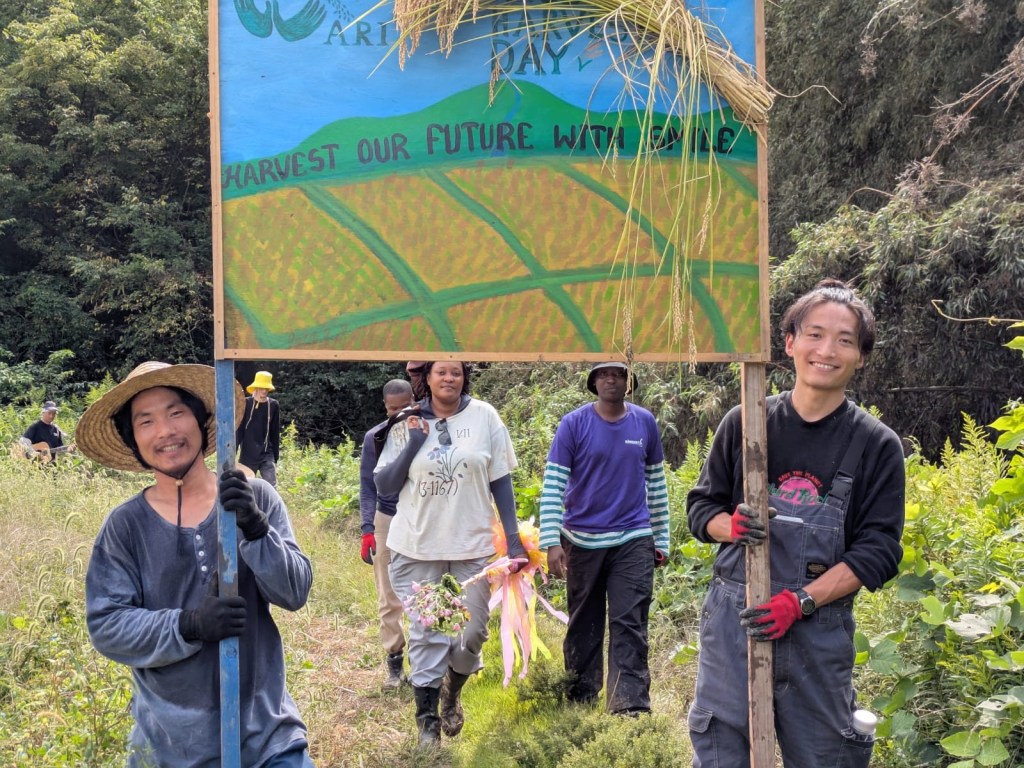
    Friday the entire ARI community joined to harvest the final paddy by hand. In true ARI it fashion was a party, literally. We sang a song written for the occasion while marching to the paddy in front of a special banner.

    Let’s get this rice party started.
    Kenwang and Nao leading the way.

    Once there we found a muddy field. Not surprising given that rice grows where it is too wet for other crops.

    Mud past Scott’s ankles.

    The process is to take a small sickle and cut the rice. Then it is gathered into bundles and tied with twine. (Scott and Chrys spent several hours in the prior days cutting twine to length.) The photos at the top show Chrys and Scott holding harvested bundles.

    The community harvesting.

    Then the bundles are fed into the same clever machine that threshes the rice.

    Masa feeds the bundles and Frederick collects the straw, still tied in bundles for easy handling.

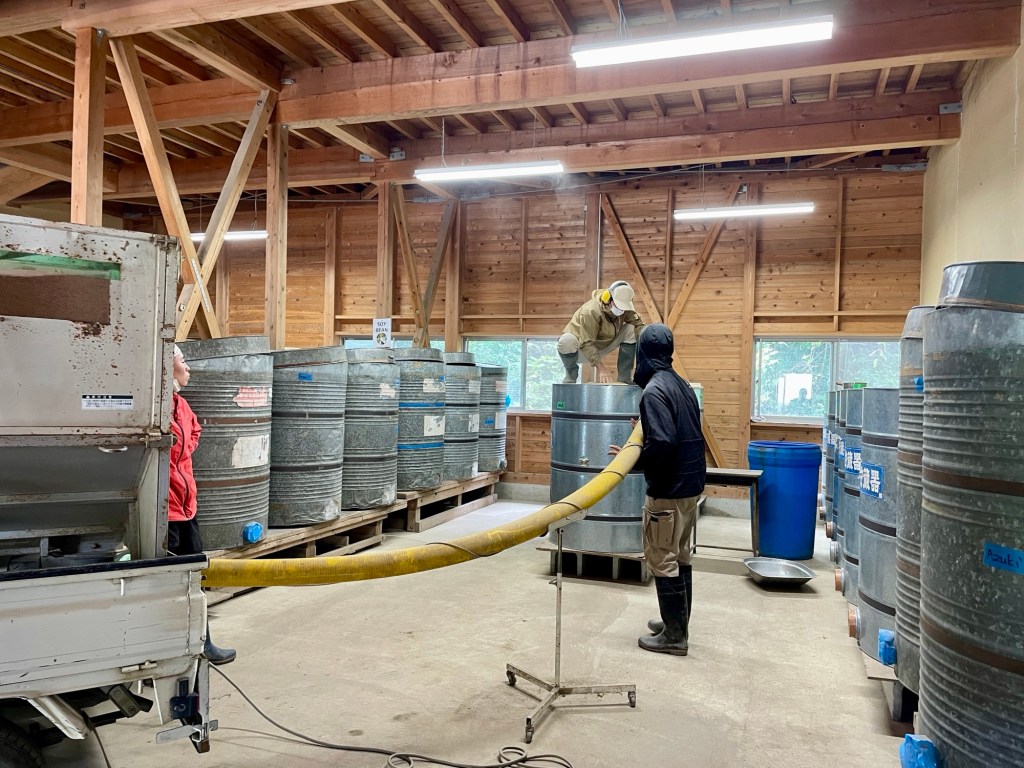
    Finally the rice grain is stored in metal tanks and the straw is stored for later use as bedding for lambs. Nothing is wasted at ARI.

    The Grain Tank truck.
    Transferring rice to the storage tanks.

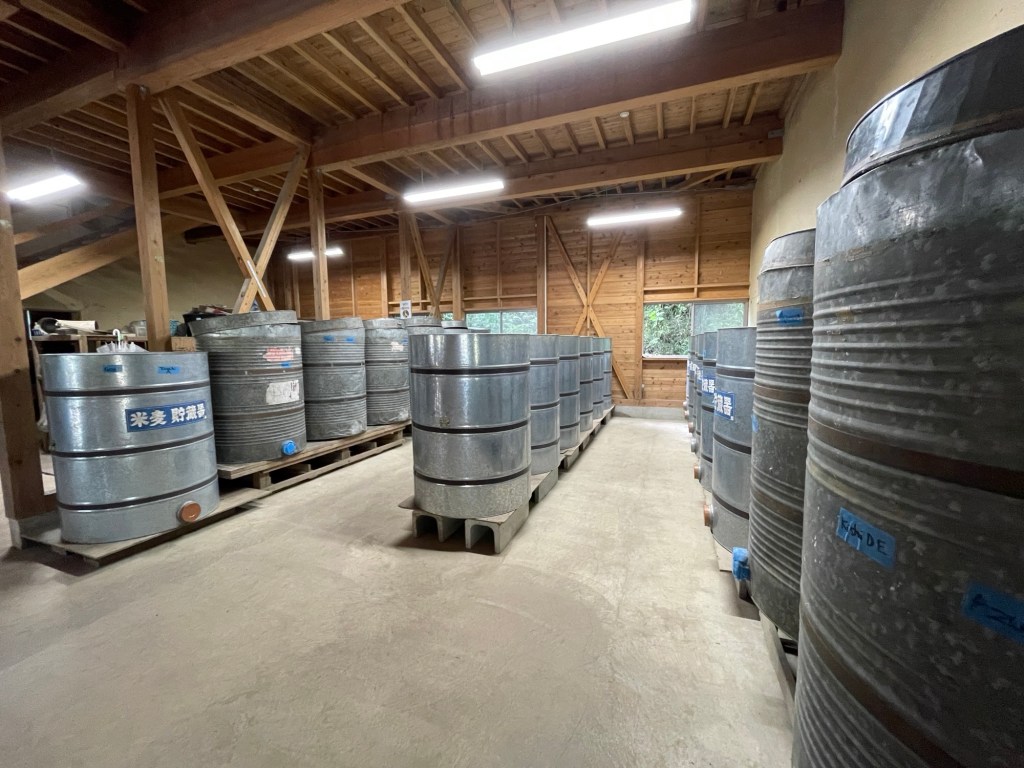
    We had spent a lot of time cleaning the storage tanks and the storage room to prepare for the harvest.

    Ready for the harvest.

    We eat rice for each meal, so a successful harvest truly is a cause for celebration.

  • Auto-Pizza

    At home we usually have pizza about once a week. As we hit the one-month mark in Japan our pizza craving was strong. So this weekend we walked to a restaurant called Olive Hill, which promised pizza, pasta, and spaghetti.

    They say Japan is living in 2050, and Olive Hill was a model of restaurant automation. When you arrive you check in at a kiosk (there was a line) and get your number and a ticket with a QR code. We got number 3269.

    Self Check-In

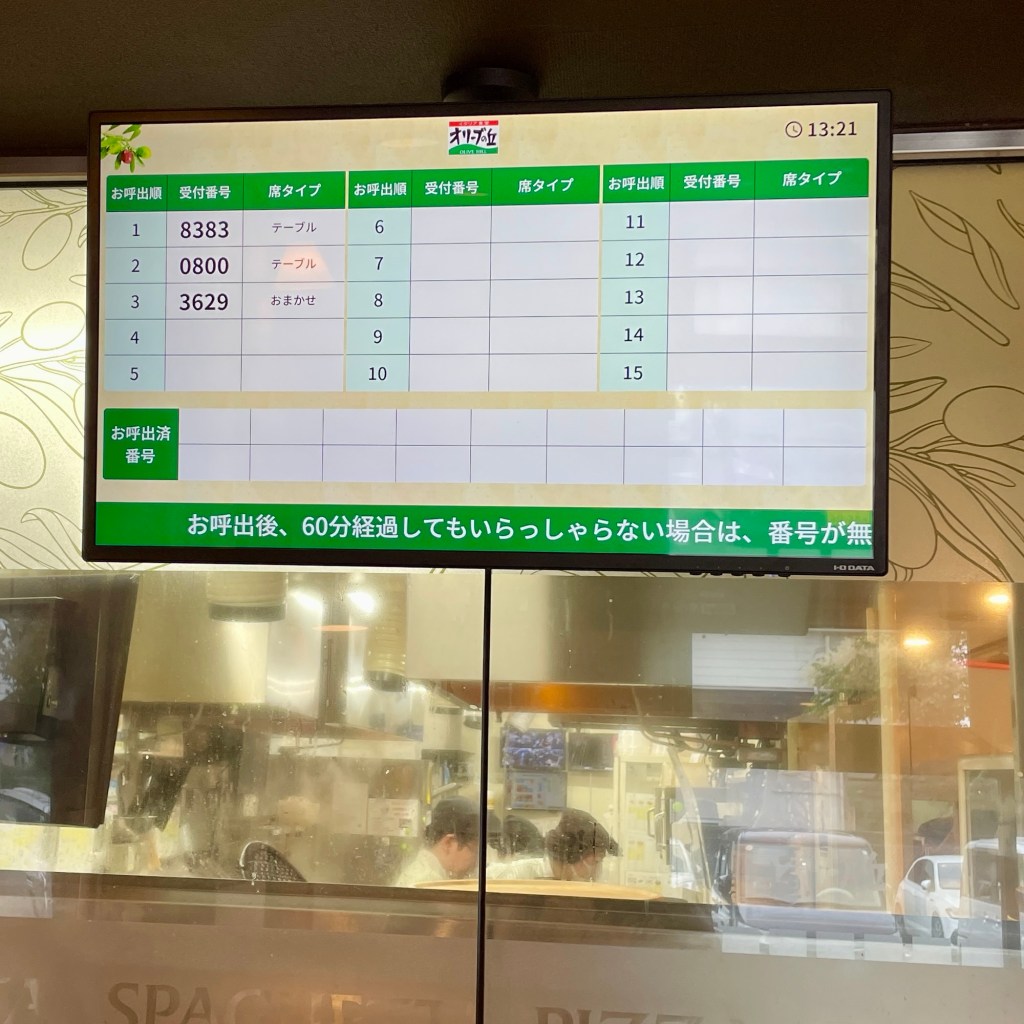
    You can check your status on an overhead display. We were third in the queue. This brings back memories of waiting at the DMV.

    Olive Hill or DMV?

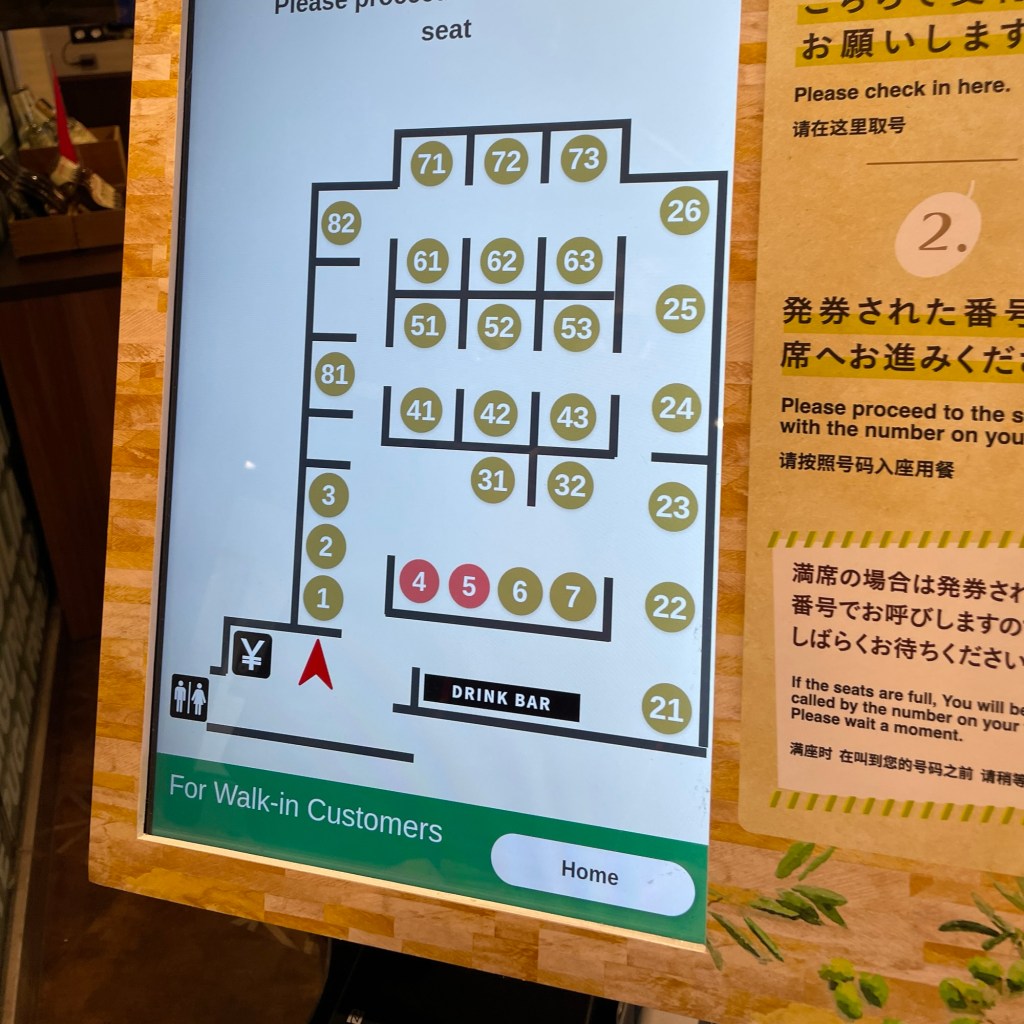
    When your number is up, you go back to the kiosk, scan the QR code on your ticket, and it shows you where to sit. We got seats 4 and 5, just around the corner.

    A map of your seat assignments.

    Now to the business. You peruse the extensive “Grand Menu”, where each item has a unique number.

    Is that Mt. Fuji on the cover?

    Chrys got the margherita pizza, number 141.

    Scott got number 142, with garlic.

    Then you enter the number for each item you order into the tablet at your seat.

    Fortunately the tablet has an English-language option.

    This is when it gets 2050. A robot delivers your food. Watch the video of the robot delivering our salads. It comes to your table, the front display shows your seat number so you know the food is for you, then it spins around to offer it up. After you take your food you push a button to send the robot scurrying back to the kitchen.

    Foodbot.

    The pizza comes with an individual pizza cutter. The pizza was good. We are pretty open to different styles of pizza, and this one was just fine.

    One of the things we have found is that the food never tastes like you expect. You expect sweet, it is salty. Or vice versa. Or the texture is different. The key is to let go of your expectations, do not compare it to “back home,”and accept the food on its own terms. On its own terms this was good pizza.

    The beer was excellent. Scott has had many meals in Japan that were redeemed by excellent beer.

    You can add Tabasco and Powder Cheese. Yum.

    Condiments.

    When you are done, you press a button on the tablet, and that signals the staff to clear your table. That part is not yet automated. You take your QR code to the Self Checkout kiosk and pay.

    Many places in Japan use self checkout.

    You can literally have an entire meal at Olive Hill without interacting with a human.

  • “Farm to Table” – when the table is in the middle of the farm

    Almost everything we eat at ARI comes from our farm. At every meal we eat rice harvested from our fields. Almost every day we eat eggs from our chicken (and sometimes the chickens themselves), and several times a week we have pork from our pigs and milk from our goats. Most dishes use onions from our fields and side dishes include a variety of vegetables from the gardens.

    We have eggplant with every meal because we are harvesting them and eggplant does not keep. After we return from ARI it will be a loooooooong time before we have eggplant at home. Just saying.

    Here is an example of how fast we do farm to table.

    A soy bean plant ripe for harvesting

    Friday morning we were on the Farm team that harvested a few of our soy beans plants.

    The harvest is plentiful, but the laborers are few.

    Back at the Farm shop we separated the pods (the rest of the plant is used for livestock feed).

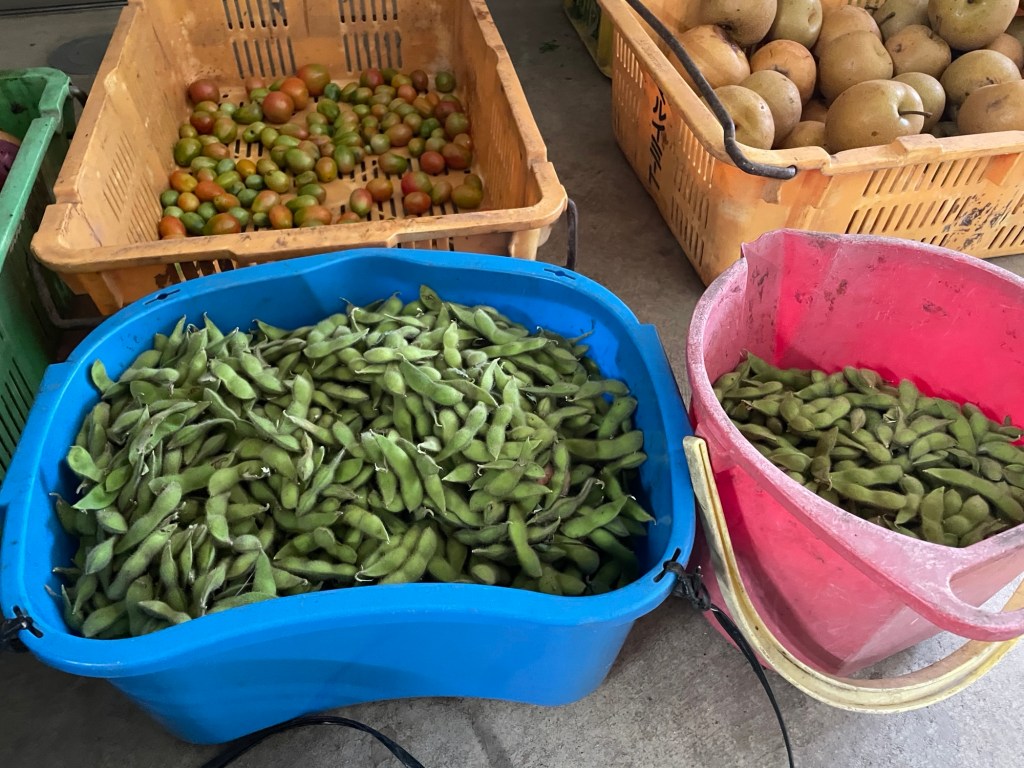
    Buckets of soy beans outside the kitchen .

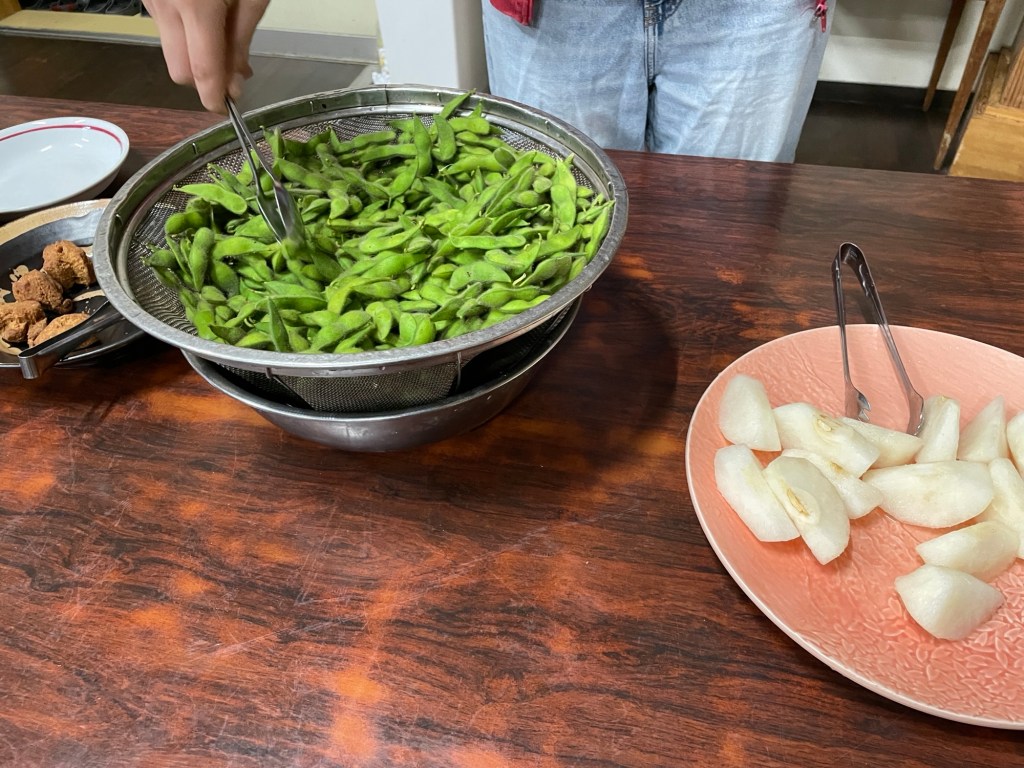
    And that evening we had edamame for dinner.

    Many people live this way, of course, and most people lived this way not long ago. But in North America and many other places we have become disconnected from our food sources. That matters. What do you feed the chickens and the goats, and how do you care for them, when you know you will be eating the eggs from those chickens and drinking the milk from those goats? What chemicals do you (or don’t you) spray on the soy beans when you know you will be eating those beans?