We have arrived at ARI and settled into our room in the guest house (pictured).
Our home for the next 2-1/2 months.
The participants (students) and other volunteers stay in men’s and women’s dormitories, but as a married couple on a long term volunteer placement we got the upgrade, including air conditioning, which is a real bonus as it has been unusually hot here.
And about the title of this post. We got a tour of the campus this afternoon. We raise pigs and goats and chickens, among other things. When the time comes the pigs and goats are sent off site for “processing”. But the chickens are done in house, so to speak. As we were shown the chicken-killing room our guide explained that each participant is required to take shifts killing chickens (unless they have a religious or cultural prohibition). But as volunteers we are not required to kill any chickens. Chrys immediately accepted the exemption, but Scott might try his hand at it. We shall see when the time comes.
We are serving at ARI through the Mission Volunteers program of the United Methodist Church (UMC).
First, a word about the words “mission” and “missionary”. When you hear those words, you might think only of proselytizing – one person actively trying to convert other person to a religious belief. Something like the 16th century priests accompanying the conquistadors throughout the Americas or the 21st century earnest young men in the musical comedy The Book of Mormon. That is not what we are talking about here.
As John Wesley, the founder of the Methodist movement, famously said,
“Do all the good you can, By all the means you can, In all the ways you can, In all the places you can, At all the times you can, To all the people you can, As long as ever you can.”
That is the type of “mission” we are talking about here.
There are many ways to look at mission work, but broadly speaking much mission work can be put into three categories.
On one end, there are mission teams. These involve short-term projects where a team will (usually) travel to a site to perform a defined task. For example, each year our own Episcopal church sends a team of volunteers to Juarez, Mexico, to build a house for a family. A typical mission project lasts a few days, a week, or perhaps a bit longer. The UMC calls this Volunteers in Mission, or UMVIM.
On the other end, there are missionaries who have a particular skill and work in a long-term role to help an underserved community. For example, a doctor may work in a clinic for years or decades. The UMC calls these people Global Missionaries.
What we are doing falls in between – mission placements from two months to two years. The UMC calls us Mission Volunteers. A mission volunteer supports the work of an existing institution or program.
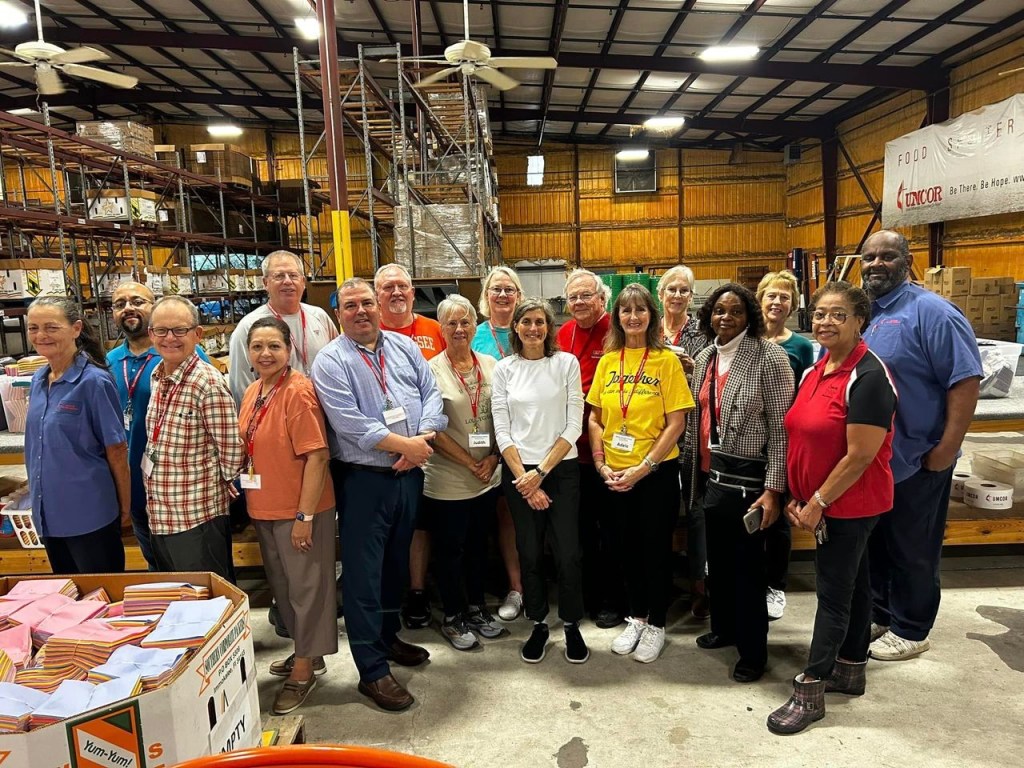
Our UMC Mission Volunteers class during our training in Louisiana in 2024.
This is Chrys’ fourth placement as a UMC Mission Volunteer. In 2023 she served three months working in the library and the huerta at Universidad Bíblica Latinoamericana in San José, Costa Rica.
Chrys working in the huerta at Universidad Bíblica Latinoamericana in 2023
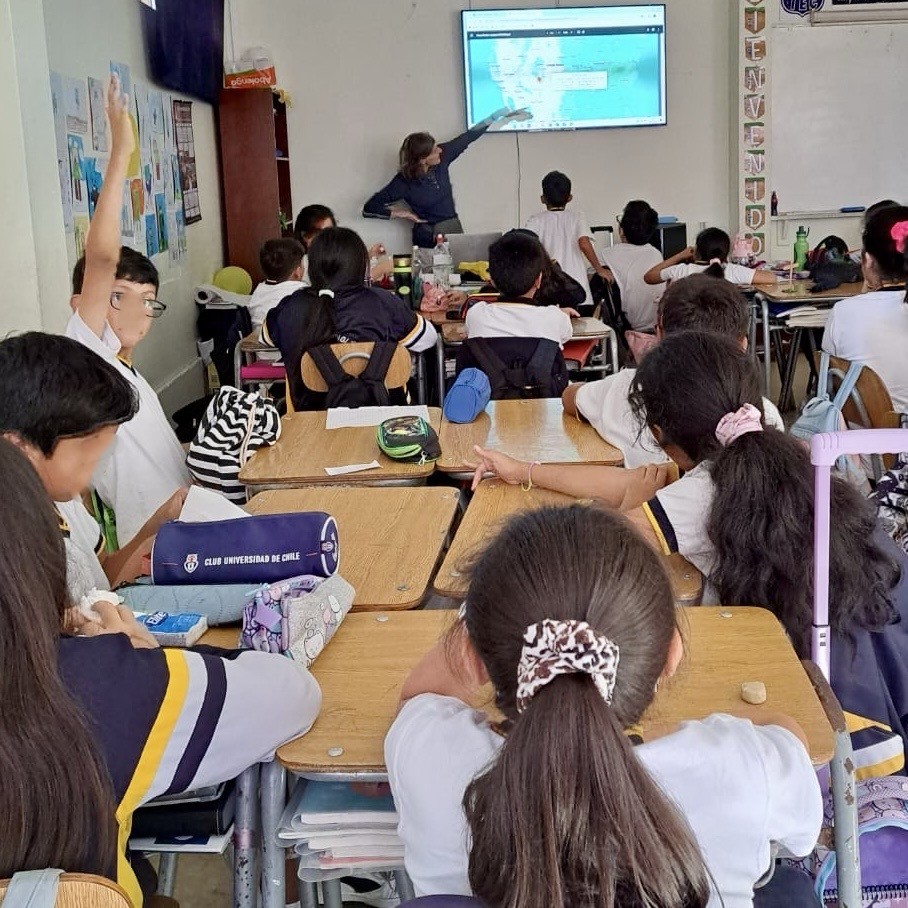
Last year she taught English for three months at Colegio Inglés in Iquique, Chile.
Chrys teaching a class about being a mission volunteer during “John Wesley Week” at Colegio Inglés in 2024
And earlier this year she taught English through the Manos Juntas mission in Rio Bravo, Mexico.
We are serving as mission volunteers working at the Asian Rural Institute (ARI). We will be at ARI from September 1 to November 15.
ARI is a place of communal learning in Japan. ARI’s campus is a self-sufficient 15-acre organic farm near Nasushiobara (about 100 miles north of Tokyo), where the community grows over 90 varieties of crops and vegetables and raises livestock. As a church-related institution, ARI is Christian in inspiration and interfaith in practice.
ARI’s class of 2025
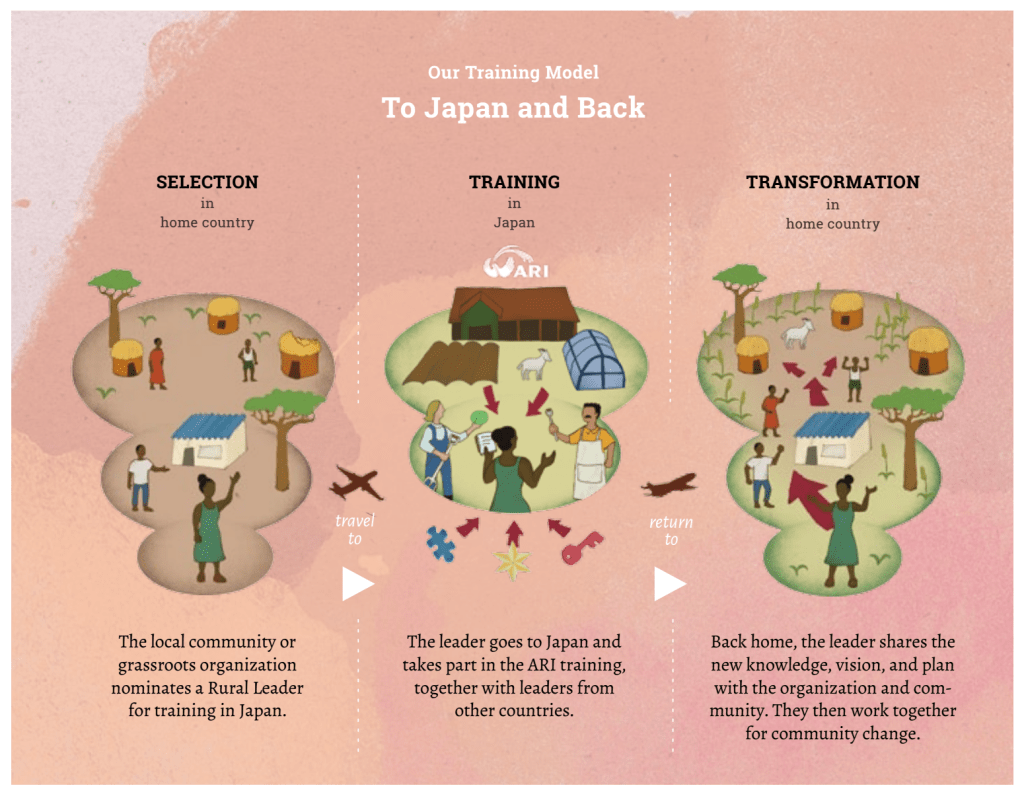
Founded in 1973, ARI provides leadership training for grassroots community leaders through the annual Rural Leaders Training Program. Every year, ARI invites about 25 young leaders from organizations in Asia, Africa, Latin America, and the Pacific to its campus. The class of 2025, representing 17 countries, is pictured. ARI has had 1,445 graduates from 63 countries.
The 9-month training is built on three pillars: Servant Leadership, Sustainable Agriculture (Foodlife), and Community of Learning. After their training at ARI, the leaders return home to their rural communities to implement what they have learned about leadership, community building, and sustainable agriculture.
The name of this blog is a family inside joke. No governor is involved.
Perhaps you have had an experience where you are having a conversation about a topic, the conversation moves on from the topic, but then much later someone starts talking about that topic again as if it was still the current topic? A conversational non sequitur, so to speak. We call that “going to Japan with the governor”. The Germans probably have a word for it, and if you know the correct term then let us know in the comments.
The backstory. Many years ago, we lived in Colorado, and we were at a group dinner. The then-governor of Colorado (Roy Romer) was going to Japan as part of a trade delegation, and for some odd reason that briefly became a topic of dinner conversation. And the conversation moved on, as happens. About half an hour later one person at the table (who shall not be named to protect Blair’s identity) suddenly started talking about the governor going to Japan, as if the past thirty minutes had not happened. It stumped the table. And thus, was born a family expression.
Roy Romer Japan-going Governor of the State of Colorado (1987-1999)
So, when we needed a title for this blog about going to Japan, well there you go. And if any governor should visit Japan while we are here, that is strictly coincidental.