Going to Japan with the Governor

Serving as long-term mission volunteers at ARI. Friendship. Farming. Inspiration.

Author: Scott and Chrys

  • Rice Harvest

    It is rice harvesting season, and last week ARI harvested its six rice paddies. We ended up with 8.6 tons of rice.

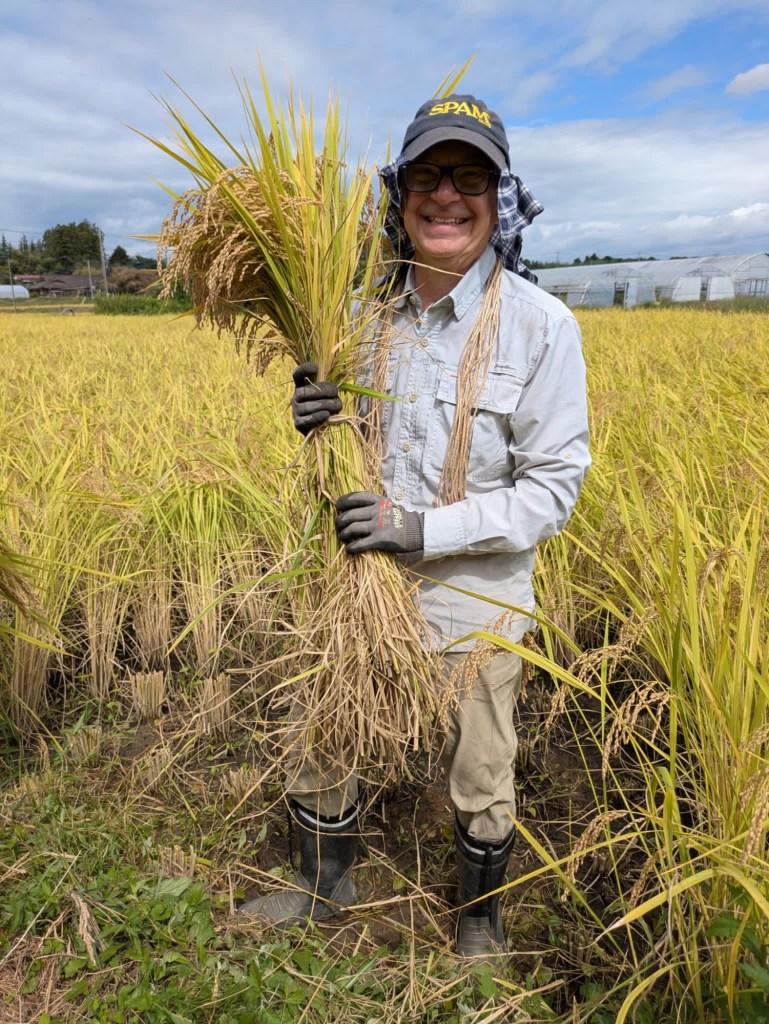
    Chrys displaying some of her work.
    Note the expertly cuts lengths of twine around Scott’s neck.

    The ARI harvesting began on Sunday, and by Thursday five of the paddies had been harvested by machine. These are clever machines that suck rice plants in the front, thresh the grains, and leave the straw.

    This is not ARI’s machine, but was next to one of the ARI soy bean fields.

    Friday the entire ARI community joined to harvest the final paddy by hand. In true ARI it fashion was a party, literally. We sang a song written for the occasion while marching to the paddy in front of a special banner.
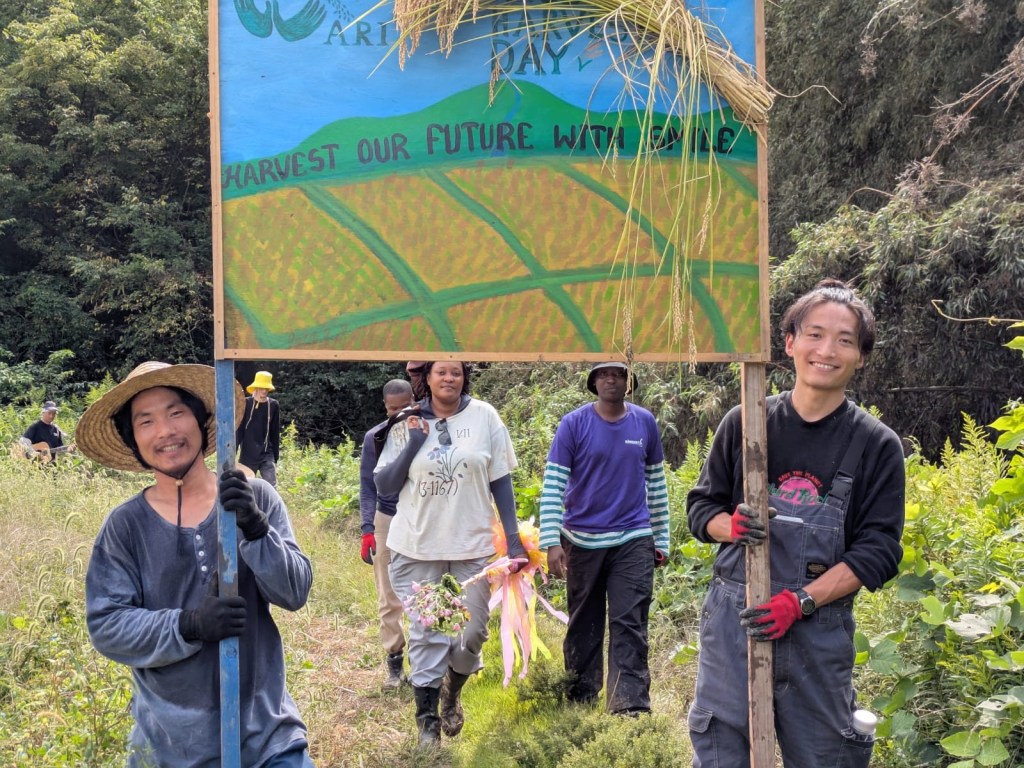
    Let’s get this rice party started.
    Kenwang and Nao leading the way.

    Once there we found a muddy field. Not surprising given that rice grows where it is too wet for other crops.

    Mud past Scott’s ankles.

    The process is to take a small sickle and cut the rice. Then it is gathered into bundles and tied with twine. (Scott and Chrys spent several hours in the prior days cutting twine to length.) The photos at the top show Chrys and Scott holding harvested bundles.

    The community harvesting.

    Then the bundles are fed into the same clever machine that threshes the rice.

    Masa feeds the bundles and Frederick collects the straw, still tied in bundles for easy handling.

    Finally the rice grain is stored in metal tanks and the straw is stored for later use as bedding for lambs. Nothing is wasted at ARI.

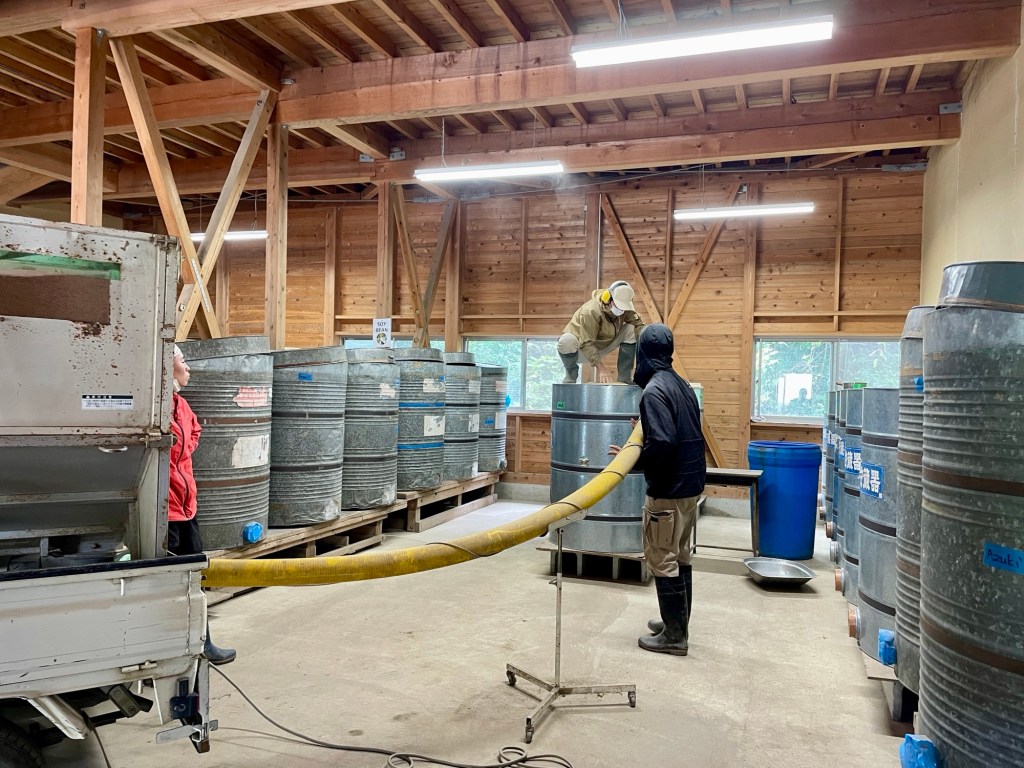
    The Grain Tank truck.
    Transferring rice to the storage tanks.

    We had spent a lot of time cleaning the storage tanks and the storage room to prepare for the harvest.
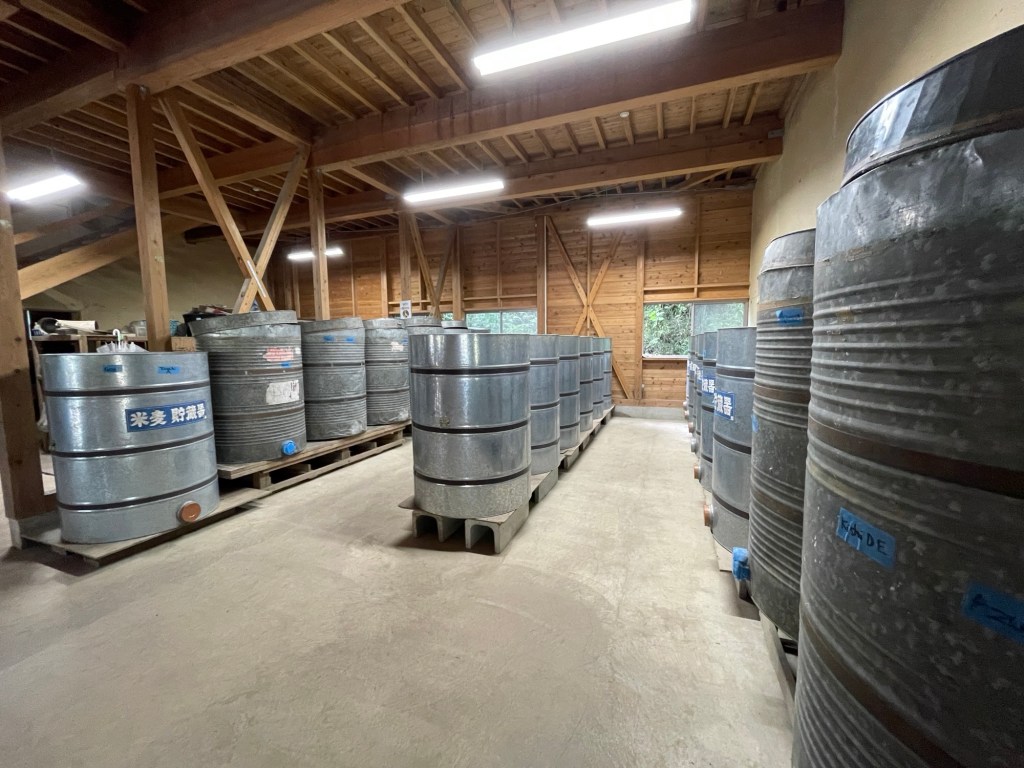
    Ready for the harvest.

    We eat rice for each meal, so a successful harvest truly is a cause for celebration.

  • Auto-Pizza

    At home we usually have pizza about once a week. As we hit the one-month mark in Japan our pizza craving was strong. So this weekend we walked to a restaurant called Olive Hill, which promised pizza, pasta, and spaghetti.

    They say Japan is living in 2050, and Olive Hill was a model of restaurant automation. When you arrive you check in at a kiosk (there was a line) and get your number and a ticket with a QR code. We got number 3269.

    Self Check-In

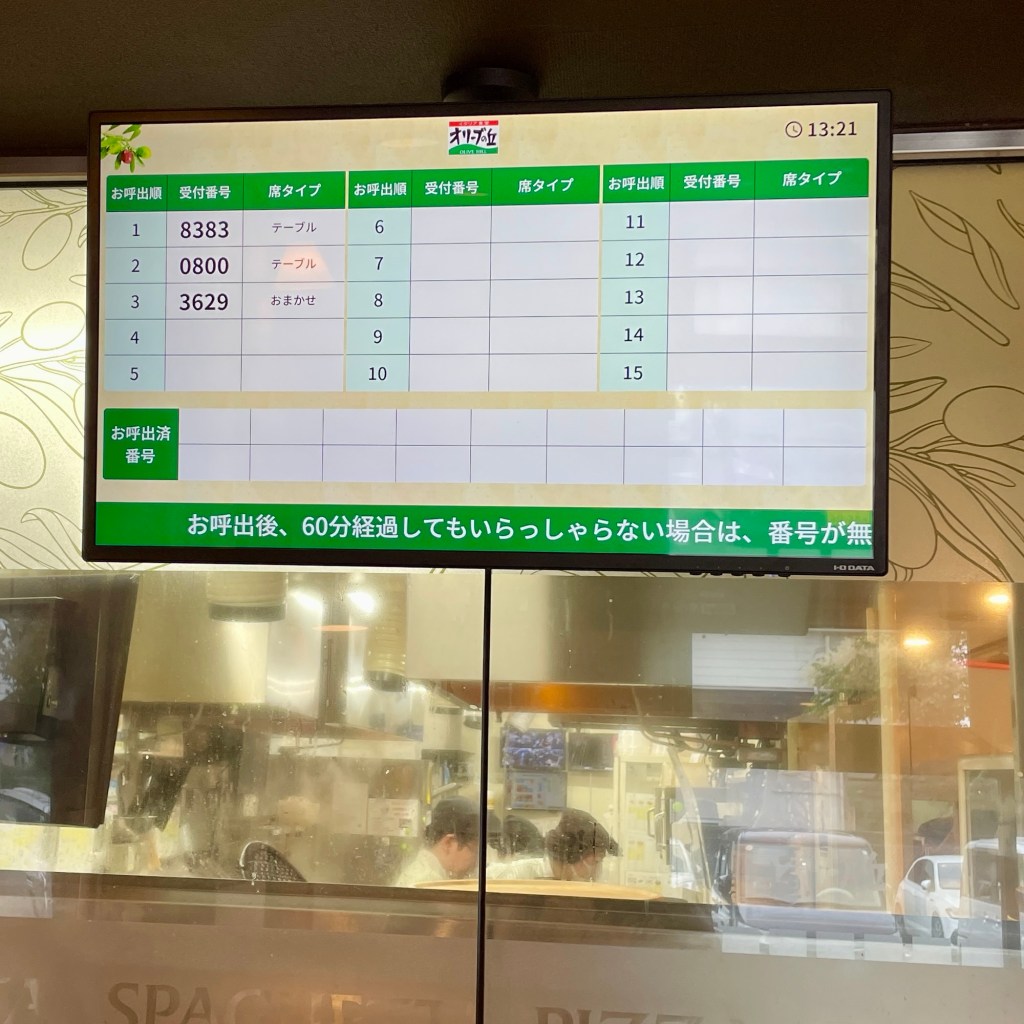
    You can check your status on an overhead display. We were third in the queue. This brings back memories of waiting at the DMV.

    Olive Hill or DMV?

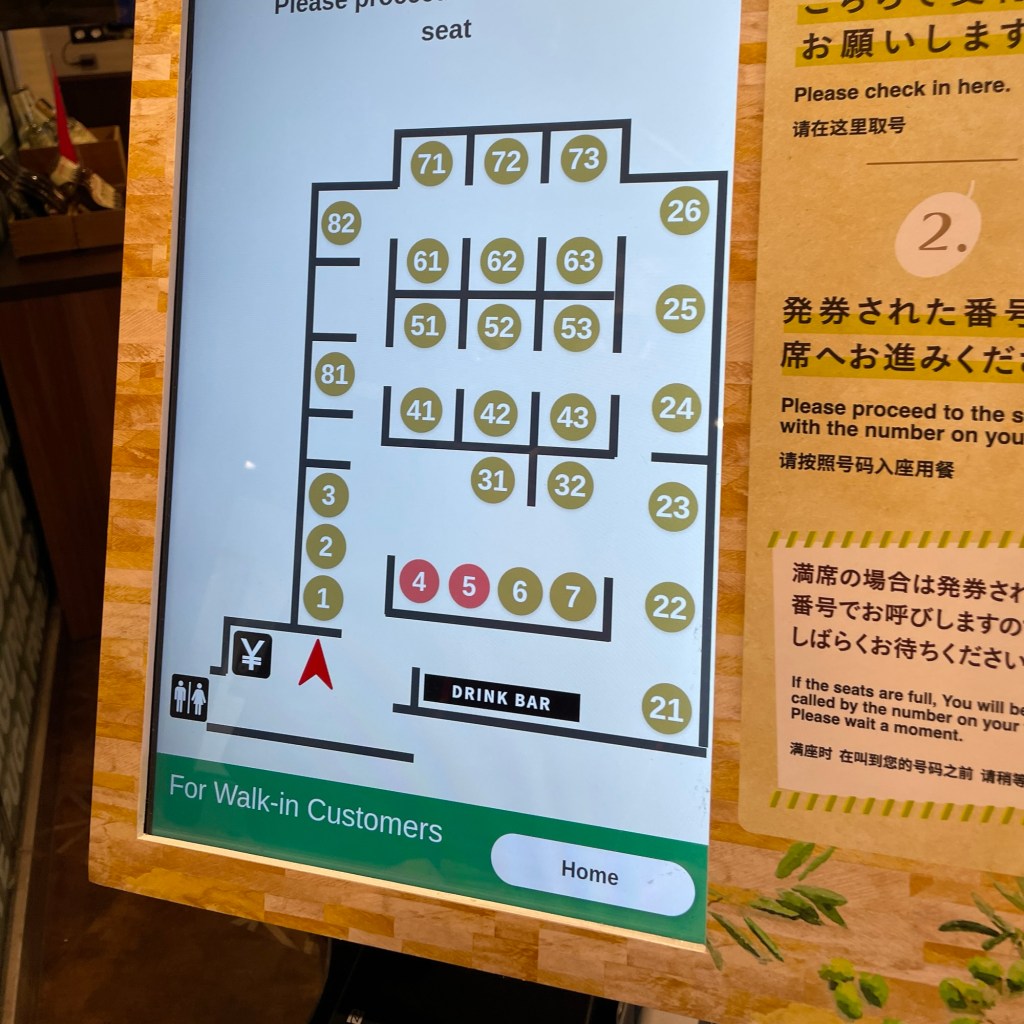
    When your number is up, you go back to the kiosk, scan the QR code on your ticket, and it shows you where to sit. We got seats 4 and 5, just around the corner.

    A map of your seat assignments.

    Now to the business. You peruse the extensive “Grand Menu”, where each item has a unique number.

    Is that Mt. Fuji on the cover?

    Chrys got the margherita pizza, number 141.

    Scott got number 142, with garlic.

    Then you enter the number for each item you order into the tablet at your seat.

    Fortunately the tablet has an English-language option.

    This is when it gets 2050. A robot delivers your food. Watch the video of the robot delivering our salads. It comes to your table, the front display shows your seat number so you know the food is for you, then it spins around to offer it up. After you take your food you push a button to send the robot scurrying back to the kitchen.

    Foodbot.

    The pizza comes with an individual pizza cutter. The pizza was good. We are pretty open to different styles of pizza, and this one was just fine.

    One of the things we have found is that the food never tastes like you expect. You expect sweet, it is salty. Or vice versa. Or the texture is different. The key is to let go of your expectations, do not compare it to “back home,”and accept the food on its own terms. On its own terms this was good pizza.

    The beer was excellent. Scott has had many meals in Japan that were redeemed by excellent beer.

    You can add Tabasco and Powder Cheese. Yum.

    Condiments.

    When you are done, you press a button on the tablet, and that signals the staff to clear your table. That part is not yet automated. You take your QR code to the Self Checkout kiosk and pay.

    Many places in Japan use self checkout.

    You can literally have an entire meal at Olive Hill without interacting with a human.

  • Onion update

    About ten days after we planted the seeds, the onions are doing well.

    Seedlings at ten days. The long thin plants are onions, the rest are weeds.

    Today we weeded the seedlings. It can be very meditative work.

    Patient work.

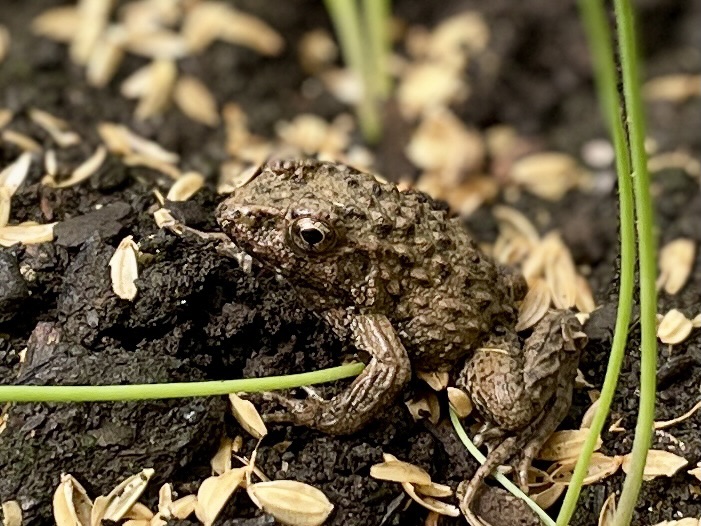
    And we had company.

    It was hard to take its picture because it disappeared into the earth.
  • “Farm to Table” – when the table is in the middle of the farm

    Almost everything we eat at ARI comes from our farm. At every meal we eat rice harvested from our fields. Almost every day we eat eggs from our chicken (and sometimes the chickens themselves), and several times a week we have pork from our pigs and milk from our goats. Most dishes use onions from our fields and side dishes include a variety of vegetables from the gardens.

    We have eggplant with every meal because we are harvesting them and eggplant does not keep. After we return from ARI it will be a loooooooong time before we have eggplant at home. Just saying.

    Here is an example of how fast we do farm to table.

    A soy bean plant ripe for harvesting

    Friday morning we were on the Farm team that harvested a few of our soy beans plants.

    The harvest is plentiful, but the laborers are few.

    Back at the Farm shop we separated the pods (the rest of the plant is used for livestock feed).

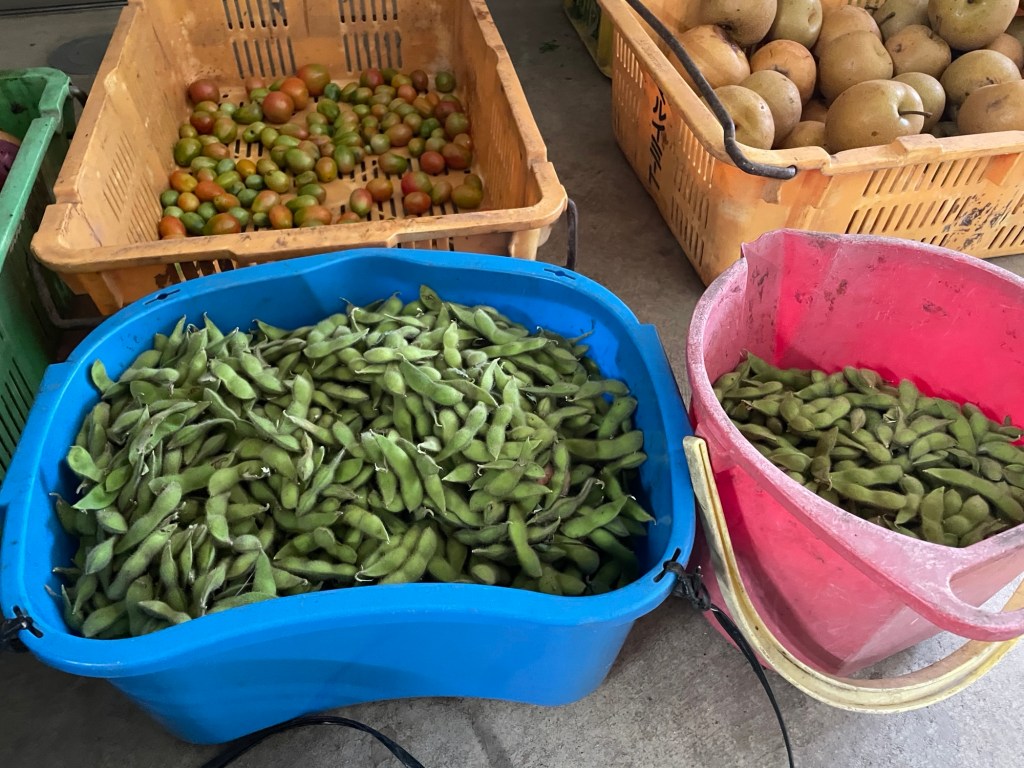
    Buckets of soy beans outside the kitchen .

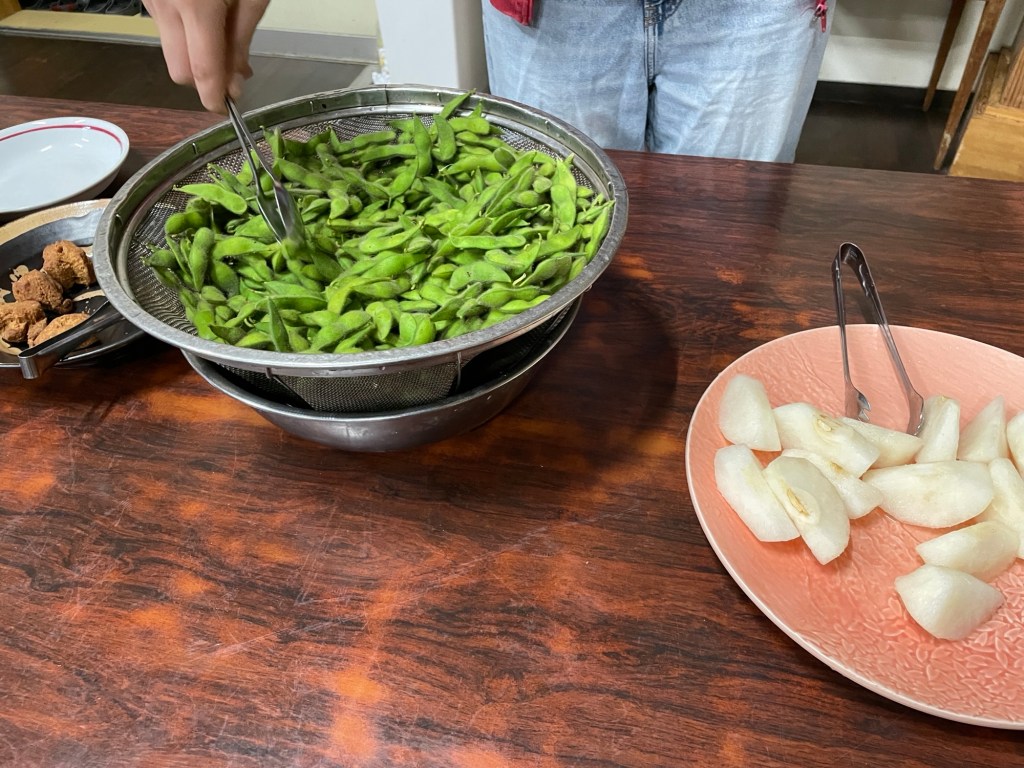
    And that evening we had edamame for dinner.

    Many people live this way, of course, and most people lived this way not long ago. But in North America and many other places we have become disconnected from our food sources. That matters. What do you feed the chickens and the goats, and how do you care for them, when you know you will be eating the eggs from those chickens and drinking the milk from those goats? What chemicals do you (or don’t you) spray on the soy beans when you know you will be eating those beans?

  • Couples therapy (updated)

    What are we doing in this picture? Wrong answers only in the comments. But we would be shocked if anyone had the correct answer anyway. We will update this post in a few days with the answer.

    (Update) We are storing silage in barrels. Silage is corn fodder that is converted into livestock feed through fermentation.

    That morning a team of participants had harvested the feed corn. (Most corn in Japan is grown for livestock feed.) The corn stalks are cut at the base.

    In the afternoon we ran the entire stalks, including the leaves and the ears, through a wood chipper. That leaves a large pile of shredded corn. You can see some of it on the ground.

    What we are doing in the photo is putting the corn fodder into barrels with some ground rice husk to encourage fermentation. While Chrys sat on the overturned barrel to the left of the picture, Scott would put three pitchforks full of corn material into the barrel, then two handfuls of rice husks, and mix it up a bit. Then Chrys would get into the barrel and stomp it down. She has plastic bags on her boots to prevent dirt from the boots getting into the barrel.

    Repeat until the barrel is full. Our team filled up about 15 barrels over two days.

    A barrel of fun.

    There are two methods of compressing the material in the barrels. Chrys opted for the stomping method, but some of the younger and more energetic team members opted for more of a jumping method, shown in the video.

  • The Parable of the Onion Seed

    “What parable can I use to explain it? Consider a mustard seed. When scattered on the ground, it’s the smallest of all the seeds on the earth; but when it is planted, it grows and becomes the largest of all vegetable plants.” Mark 4:30-32. Respectfully I beg to differ with Jesus.

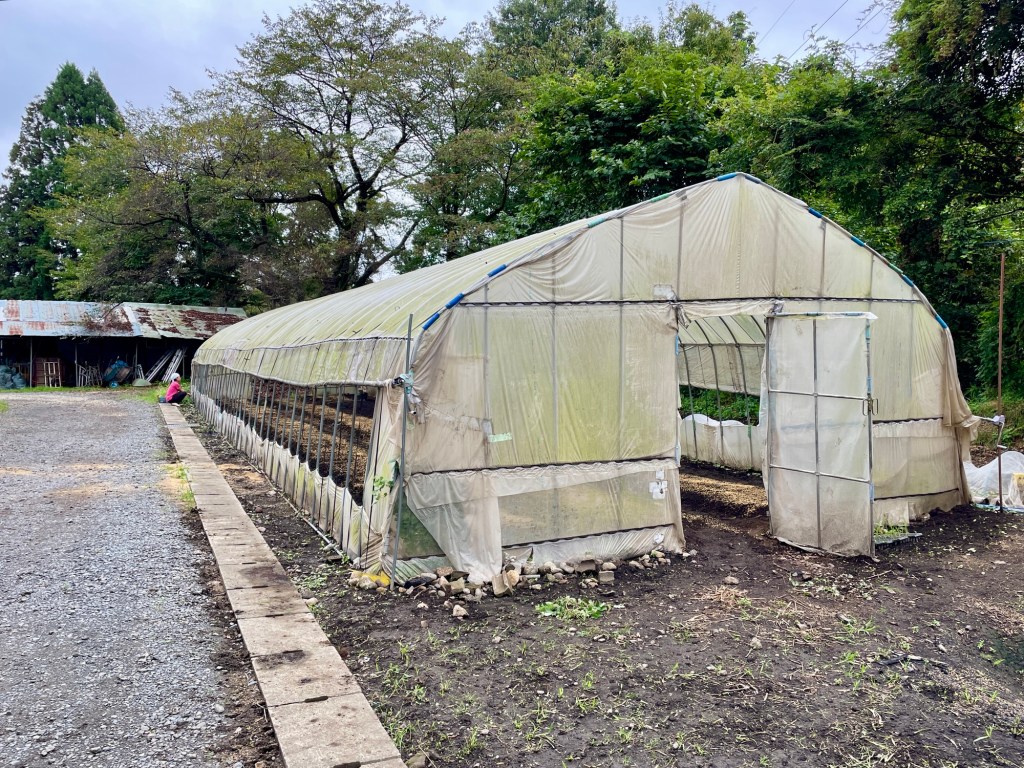
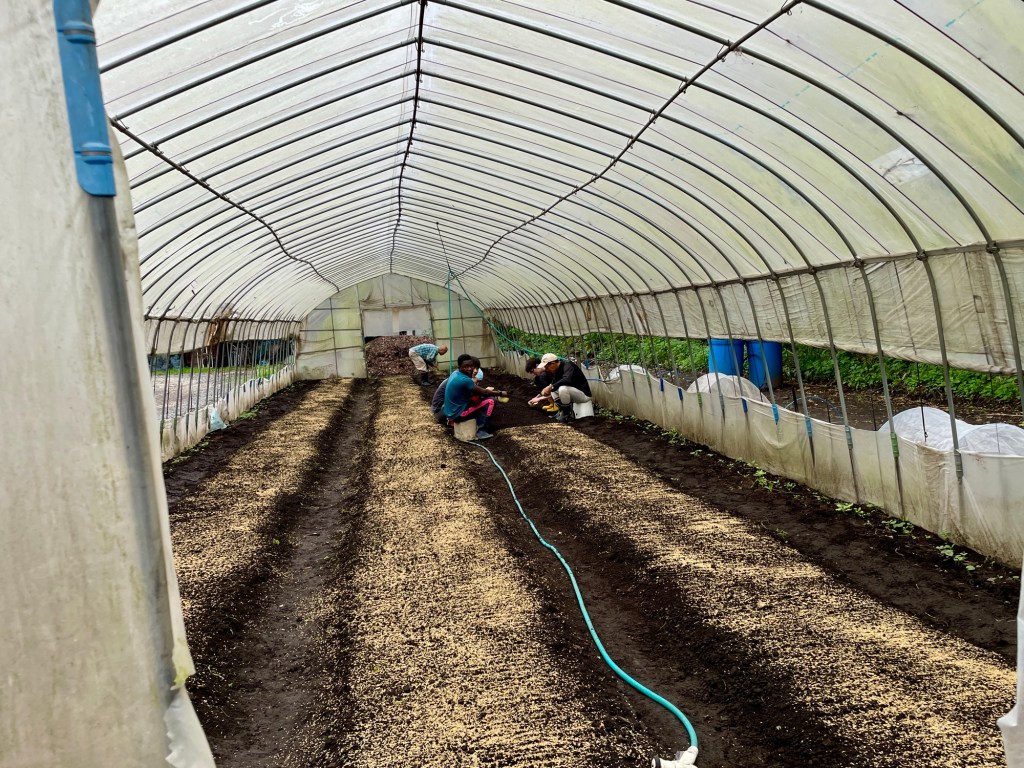
    This past week the Farm team planted onion seeds in the greenhouse.

    The greenhouse at ARI.
    Inside the greenhouse. The yellow sections have been planted and are covered in rice chaff for protection.

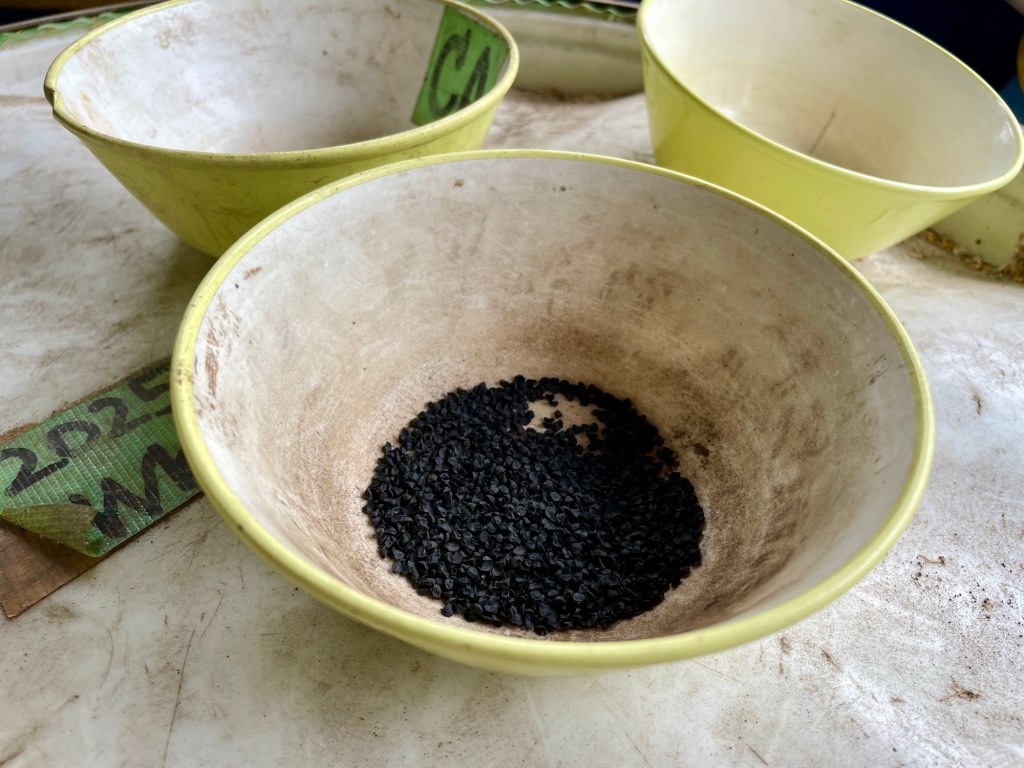
    Onion seeds are incredibly small and triangular. (If you have had an onion bagel that had small black seeds in top, those are the onion seeds.)

    A bowl of onion 🧅 seeds.

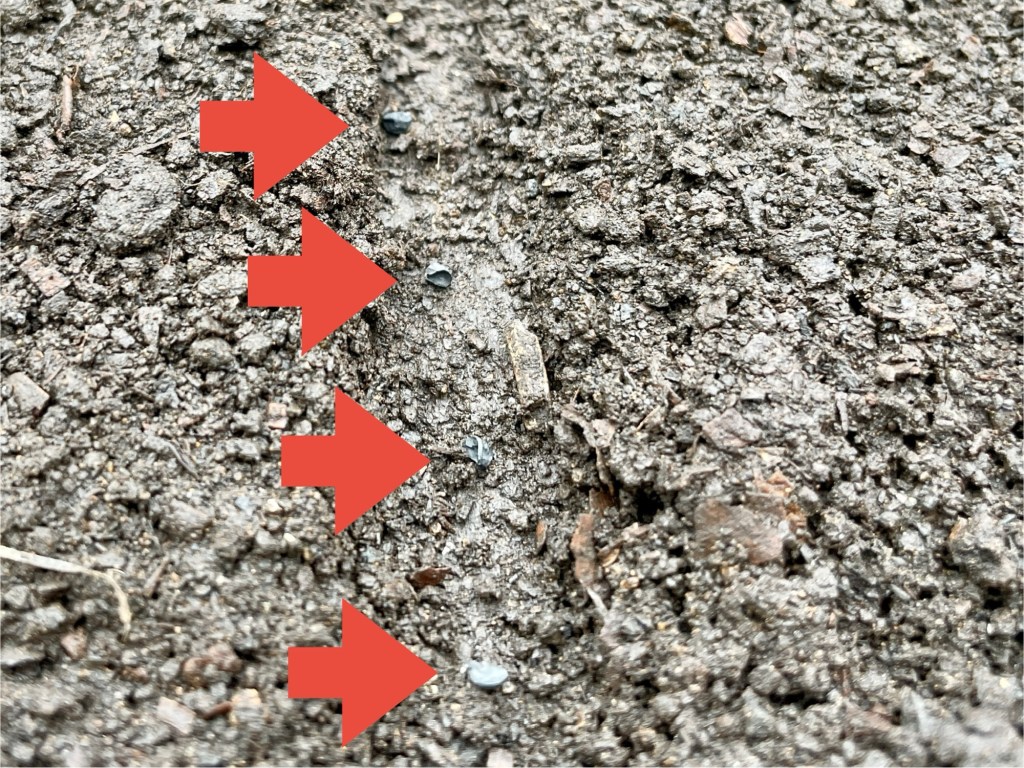
    We plant the seeds one at a time by placing them one centimeter apart in rows spaced 8 centimeters apart. See if you can find them in the pictures below.

    Here is a row of planted onion seeds. Can you spot them?
    Here is a slightly closer view showing four seeds.

    We then lightly cover the seeds with dirt. It is tedious work.

    Planting the last section.
    A group of volunteers hard at work planting onion seeds. This group of volunteers includes a woman from the US, a Japanese priest, a missionary from Togo, an organic farmer from Canada, and a German student in gap year.
    The finished product hanging around outside the kitchen.
    We eat a lot of onions at ARI.
  • “You arrived looking like a lawyer, now you look like a farmer.”

    So said one volunteer to Scott the other day. As the expression goes, Scott is not a farmer, but he plays one in Japan. And he sure works like one. As you may recall from an earlier post, Scott is assigned to the Farm team for the duration of his time at ARI.

    Happiness is a weeded soy bean field.

    ARI teaches and practices sustainable, organic farming. Which means no herbicides or pesticides in its fields. Which means the fields are weeded by hand.

    Since Scott arrived the Farm team has spent most of its time weeding the ten soy bean fields around ARI. The Farm team works two hours in the morning and two hours in the afternoon (now that Sunrise farm is over). That is a lot of weeds. Scott also has spent a morning picking beetles off soy bean plants (no pesticides).

    Farm team also has been thinning out carrots. Carrots are planted three seeds per hole and some seeds do better than others. So at a point the team goes out and pull the smaller carrots and leaves the biggest carrot to grow. The pulled carrots are fed to the livestock.

    Even though we stopped Sunrise farm it still has been unusually hot and humid. Afternoon temperatures get into the mid-80s and the morning humidity is 95%.

  • Best. Starbucks. Ever.

    You would not be wrong to say that Nishinasuno is off the beaten path. But do not ever underestimate American commerce, because the main drag has both a McDonald’s and a Starbucks. This drizzly Saturday afternoon we made a trip to the latter, a 45-minute walk into town from ARI.

    Our objective was not coffee. Instead we were in pursuit of coffee mugs. We had a two-fold purpose.

    Practically, we wanted our own mugs for morning (instant) coffee in our room. The ARI day starts with morning exercise at 6:30 (see the Radio Taiso post) but breakfast is not until 8:30, and that is long time after awakening to wait for a caffeine injection. And the single kettle of (instant) coffee at breakfast does not last long among the 60 or so people. So first thing each morning we go downstairs to the community kitchen and heat water in the electric kettle to make (instant) coffee in random mugs from the shelf. It does the job, barely.

    But our primary purpose was, simply, collectibles. We collect Starbucks mugs. But not just any mugs. We collect mugs that commemorate the places we have traveled. Originally Starbucks called them City Mugs. Then they were the You Are There mugs. Now they are called the Been There Series. But whatever they are called, crucially, they are all the same size. Well, in the early days there was some wide variation until Starbucks settled on the current dimensions. So they stack well in the cupboard. And we have an entire cupboard. Maybe 50 in all, maybe more, we are not sure because our daughter absconded with some a few years ago. They come from Beijing to Berlin, Chicago to Santiago, Chile, and everywhere in between. When we are home we use these mugs daily and are reminded of our visits to those places.

    Today we hit the jackpot. The Nishinasuno Starbucks had three different mugs – spring Japan, autumn Japan, and Tochigi. Tochigi prefecture is the Japanese “state” where we are living. Scott gasped when he saw the Tochigi mug. We got the last one on the shelf – either Tochigi mugs sell like hotcakes or they could not move the last one. Most likely the latter. We got the autumn version of the Japan mug because we will be here through the season.

    Autumn Japan
    The rare Tochigi mug made Scott happy.

    But it gets better. While we were making our mug decision a preternaturally friendly staff person brought us two demitasse cups with samples of the seasonal Autumn Blend. Mind you, it had been 23 days since we had a decent cup of coffee, to be blunt about it.

    It was magical. The autumnal flavor exploded in our mouths; the caffeine shot through our veins.

    So we got two tall coffees and a pumpkin scone. The staff were excited and amazed that we were from the US (remember the beaten path, like the Shinkansen, bypasses Nishinasuno) and that we would be here for another two months. We sincerely promised to return. Later the manager introduced herself and welcomed us. The staff fussed over us when we tried to return our dish ware. And notice in the photo that the server had written on our hand wipes Have a nice day ❤️ and Thank you! 😊❤️

    The personal touch.

    Best. Starbucks. Ever. 😊❤️

  • Radio Taiso

    Each Monday through Saturday the day at ARI starts with morning exercise. The entire ARI community gathers in a large circle and does a light exercise routine to music. It lasts about 3-5 minutes. Watch the video below of a bit of ARI’s morning exercise with the sound on for the full effect.

    How the day starts at ARI. The people in the light green t-shirts are visiting university students.

    But this is not just an ARI thing. The exercise program is broadcast nationwide every morning at 6:30am on the Japanese public station NHK Radio 1. It is called Radio Taiso. Raído Taiso is done each morning in schools, work places, and anywhere there is a radio. In fact we find the key to doing morning exercise is to follow the lead of Yuko-san or Koshi-san, who grew up doing these exercises.

    Radio exercise was first broadcast nationwide in 1929. The purpose is to promote social happiness as a byproduct of maintaining and improving the health of Japanese citizens. The exercises were designed to be easy and accessible for people of all ages and to be performed anywhere. 

    Today there are three exercise programs, Nos. 1, 2, and 3, which are broadcast on a rotating basis. The current radio exercise No. 1 has been broadcast since 1951.

    You can find out more about Radio Taiso here.

  • Sunrise farm

    Sunrise Farm” sounds like a yogurt brand, but at ARI it is an activity. Namely, this week Scott has been in a carrot field at 5AM each morning, where the Farm team is thinning out the carrots.

    Sunrise farm. Photo taken at 5:18AM.

    Work at ARI is carefully (but to the newcomer, confusingly) assigned among participants, staff, and volunteers. Each ARI volunteer is assigned to two work teams. One work team is a permanent assignment for the during of their stay. The other work team assignment changes monthly.

    Chrys’ permanent assignment is a FEAST team that prepares lunch for everyone at ARI (the numbers vary but around 60 each meal) and then does kitchen clean up and maintenance after lunch. Her rotating assignment is the Chicken team. That is exactly what you think. The Chicken team does one work shift in the morning and one in the afternoon.

    Scott is permanently assigned to the Farm team. Again, the name explains it all. Ordinarily the Farm team also does a morning and an afternoon shift, but it has been so hot here that the afternoon shift has been moved to “sunrise farm”, which starts at 5AM. His rotating team assignment is a different FEAST team that prepares breakfast and supper for everyone here.

    That is how it works during the week. On weekends everyone pulls one Saturday shift with their rotating team. This is, after all, a farm with chores to do every day. So on Saturday Chrys and Scott will do a morning shift at Chickens and FEAST, respectively. All other weekend duties are spread out among everyone (participants, staff, and volunteers) and change each week. As it happens this weekend we both have FEAST breakfast duty on Saturday.