Going to Japan with the Governor

Serving as long-term mission volunteers at ARI. Friendship. Farming. Inspiration.

Author: Scott and Chrys

  • Accented

    Years ago we watched a movie called “Looking for Eric”. The titular Eric was Eric Cantona, a colorful French footballer perhaps best known for his time playing for the English club Manchester United. The movie was set in Manchester and the characters were working-class Mancunians. The movie was in the English language, but the accents were so strong we had to watch the movie with English subtitles to understand what the characters were saying.

    At ARI the lingua franca is English, but sometimes we wish it too came with English subtitles. The participants come from 19 countries in Asia and Africa. Add in the staff and volunteers and there are at least 22 countries represented. Look at the picture below and at the top of this blog to see the variety of faces.

    The ARI community. See if you spot the retired American lawyers.

    Most of the people here speak English as a second (or third or fourth) language. And for the most part their English is pretty good. But, oh, the accents…. We think of the many places we have been were English is not the primary language, and we know that usually after a while we are able to home in on the accent of the place and better understand their accented English. We probably could even pick up the accent in Manchester, give enough time.

    The issue here is the variety of accents, and often strong ones at that. One moment someone is speaking with a Zambian accent, the next a Japanese accent, then an Indian accent. And because the participants often come from countries with different ethnic groups with different native languages, the accents may differ even within a country. It is actually tiring to have to work so hard to understand what is being said all day. Especially in the early days we would listen to someone make an announcement and we would say to each another, “I have no idea what they just said.”

    We asked some of the participants if they had trouble understanding each other when they first arrived, and they emphatically said they did. But they have gotten used to the diverse accents, and we are getting better too. Still, there are a few people we may never fully understand.

  • ARI Sunday

    ARI was established by the United Church of Christ in Japan (UCCJ). While it is now more ecumenical (one of the participants is Muslim) it retains its Christian character. The ARI community frequents several area churches associated with ARI staff members. Because the Japanese population is about 1% Christian, the churches tend to be small.

    The church options.

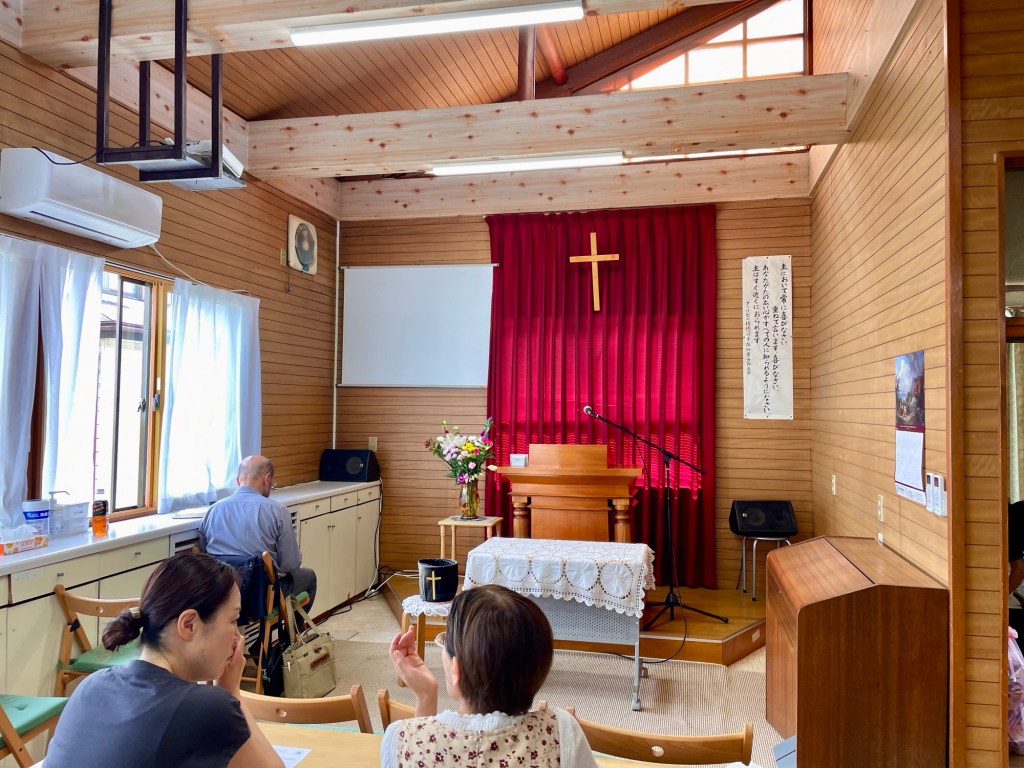
    We have attended three churches so far. The Nishinasuno church is the largest. It is a UCCJ church. The service is bilingual. We call it “Masa’s church” because the ARI Farm Director Masa drives the bus.

    Nishinasuno church.

    Today was ARI Sunday at Nishinasuno, which means an ARI participant gave the sermon and another gave testimony. The ARI community turned out in support.

    ARI Sunday notice.

    The church community fed us with a curry lunch after the service.

    Nishinasuno church.

    The most amusing part was during the closing announcements, where an earnest woman gave the entire congregation instructions, button by button, on how to use the new toilets (she projected on a screen a diagram from the user’s manual). It was funny to listen to Masa translate the instructions into English.

    This helpful sign is not from the church, but from our local Starbucks. You get the idea.

    The other UCCJ church in the area is the Nasushiobara Church. We call it Jonathan’s church because it is where the ARI staff member serves as a missionary. On Sundays when he attends the service is bilingual.

    Nasushiobara church.
    Nasushiobara church.
    Jonathan playing at church.
    Lining up for curry.
    The fourth Sunday is Curry Day! Curry is served after church.

    The third church is the Otawara Christian Church. It is affiliated with Conservative Baptist Alliance of Japan. It has an English service every week. We call it Uncle Timo’s church because ARI’s chicken wrangler is a leader there.

    Otawara Christian Church.

    Many of the congregants are alternative-language teachers (ALTs), foreigners who teach their native languages in the Japanese schools. We got a ride to church from Kamika, from Jamaica, who teaches English. Her teenage daughter Neveah is a community volunteer at ARI; she helps on the farm one day a week.

  • Morning Gathering

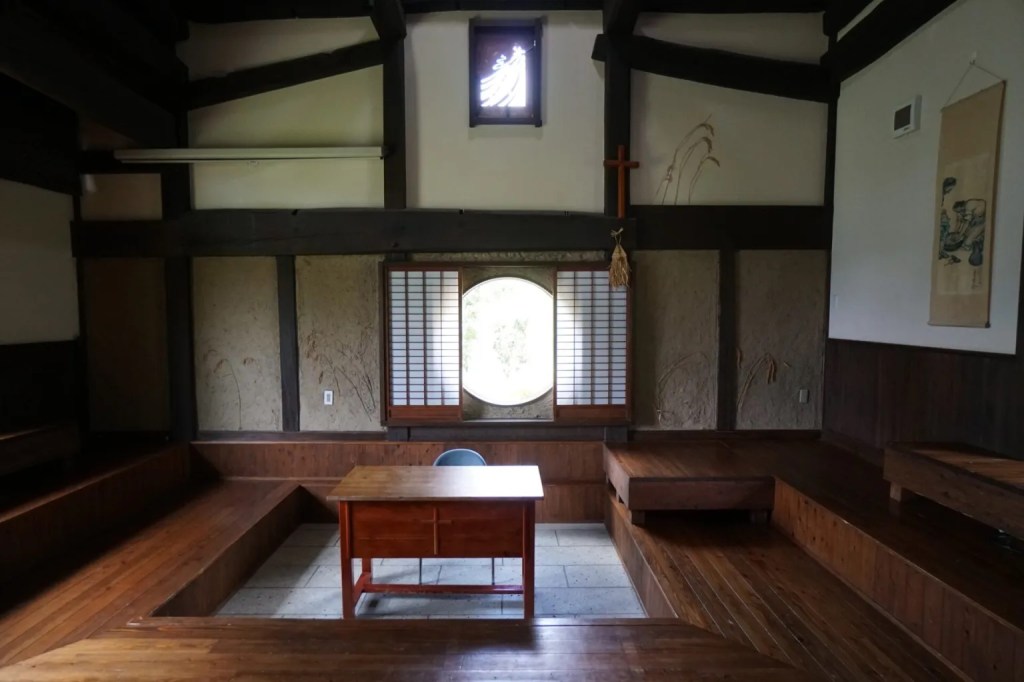
    ARI is a spiritual community. Each weekday after breakfast the entire ARI community goes to Oikos Chapel for Morning Gathering. It is a special time, and many people will tell you it is their favorite part of the day.

    Oikos Chapel was up-cycled from a 100-year-old farm house.

    At each Morning Gathering a member of the ARI community (participants, staff, volunteers) makes a presentation (about 30 minutes) of their choosing. The stated purpose of Morning Gathering, from the ARI Training Handbook, is “a time for each of us to lead the nurturing of our spiritual lives. … It should be a sharing of your life experiences, a testimony to the work of God or the effects others have had on your life.” Almost every presentation includes prayer and often there is one or more hymns or spiritual songs.

    One of the richest parts of our ARI experience has been hearing the Morning Gathering stories of others in our community. There are people here from over 20 countries, mostly from Southeast Asia and Africa. Most of the participants are from rural areas in developing countries. They lead lives and have had experiences that we could not begin to imagine. Their stories can be touching, funny, tragic, uplifting, heartbreaking, raw, joyful, and often very vulnerable. We truly are blessed to be able to share as a community this chapter of our lives together.

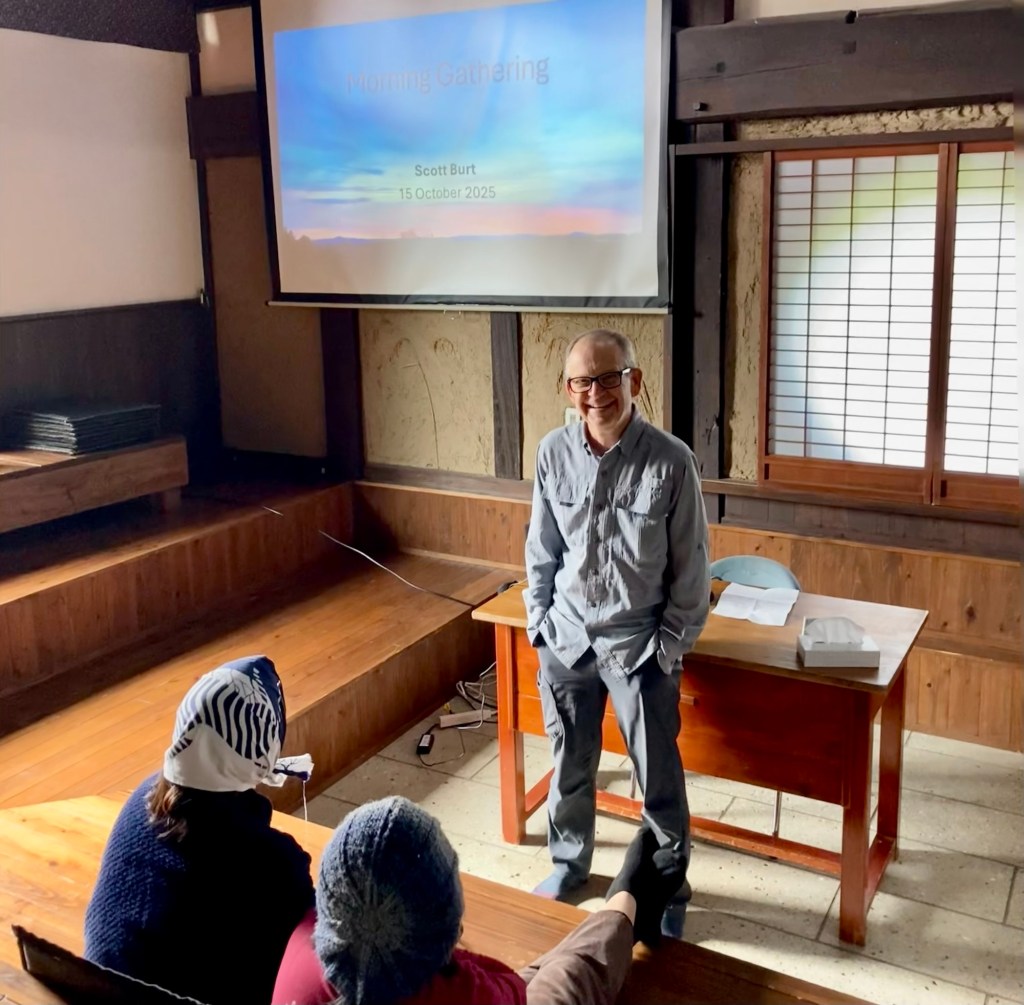
    Scott before his presentation in Oikos Chapel. Morning Gathering itself is a phone-free zone.

    Last week Scott gave his Morning Gathering presentation and this week Chrys gave hers. Scott’s presentation was built around the question “Why am I here at ARI?” – a question he gets asked often here – and no doubt many of you have wondered the same thing. Chrys’ presentation was centered on Rules to Live By. She has just hit a milestone birthday, and she shared seven rules for living she has developed during her life’s journey.

    We are among the oldest people in the community. Most, if not all, of the participants are young enough to be our children, and many of the other volunteers could be our grandchildren. Our Morning Gathering presentations allowed us to share our perspectives on God and life from the place of “retirement.”

  • Auto-Sushi

    Today was an ARI holiday so we walked into Nishinasuno for shopping, lunch, and solid WiFi. Mission accomplished on all fronts.

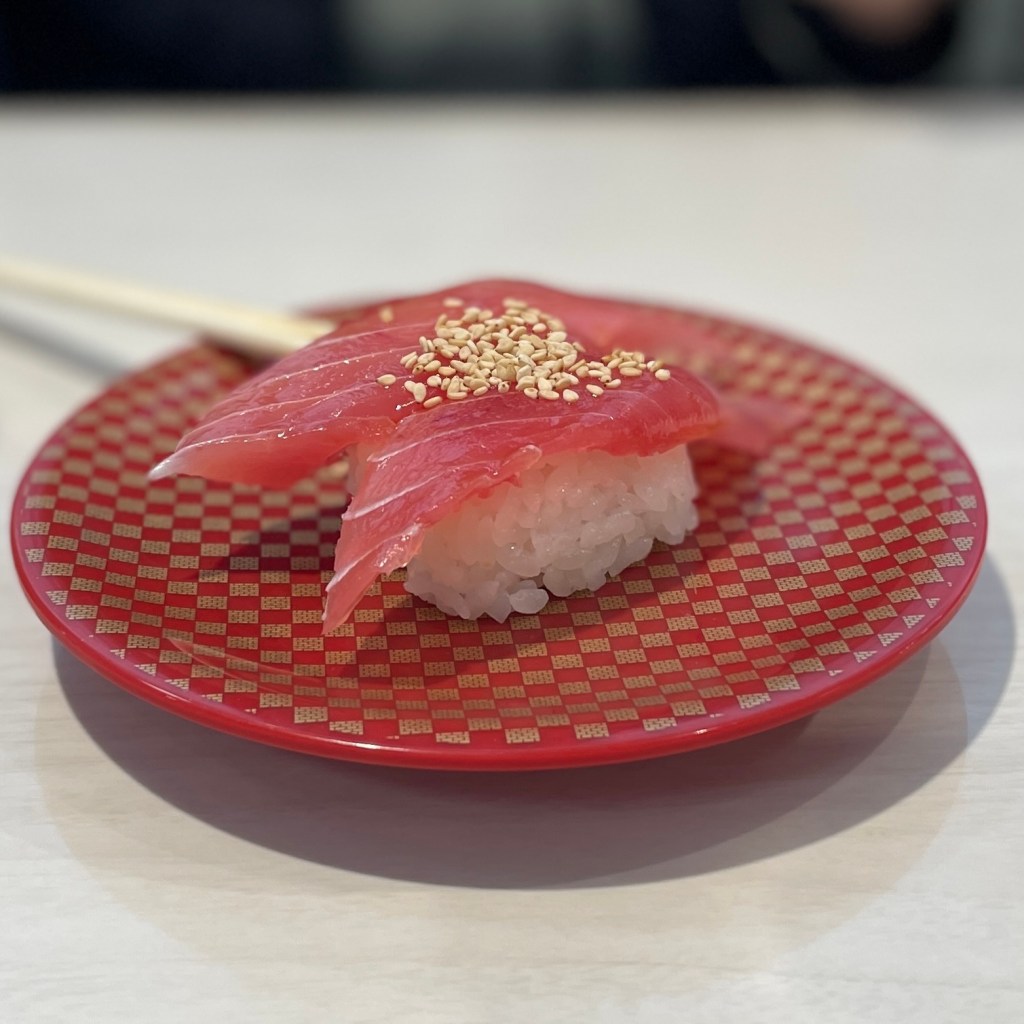
    Yum.

    For lunch we went sushi. About a month ago we had our auto-pizza adventure, and today it was auto-sushi. It was the same process: check in at a kiosk for our table assignment, order from a tablet, and self-pay at another kiosk. The only brief human interaction was the person who brought our beer. Here the food was delivered by carts on tracks that whizzed by your table. Our first item, tuna was delivered by a Shinkansen, while another table’s order went by on another track in a race car.

    Shinkansen sushi.
  • Made in Japan

    One of the things that amuses us is Japanese goods that try to be American. For example, we see people wearing sweatshirts that look to be from an American university, the kind with the school’s seal in the middle and the name around the seal, except that the school does not exist. East Tennessee Community College, anyone? Or on an item there will be a collection of words that looks like a cool American expression but actually does not make sense. This is a badge on the bike that Scott uses at ARI:

    SUPER SPORTS WORLD CENTLIRY (sic) CLASSIC. Huh?

    Recently Scott was finishing his hot goat milk after dinner and took a closer look at the mug he had grabbed from the basket.

    It is a mug for GIANT CORN. You can see on the left side it says GROW IN BIG FARM and on the right it says AMERICAN DREAM. The lower left says AMERICAN TASTE, the lower right says IMPORT, and inside the star on the right it says SWEET.

    Scott considered this, showed it to Chrys, and said “This is the most Japanese thing I have ever seen.” And we both cracked up laughing.

  • Kanpai!

    The drinking age in Japan is 20. There are beer vending machines on the street.

    Just the thing on a warm and humid Sunday afternoon. In our room, of course.

    But ARI is a religiously and culturally diverse community. No alcohol is permitted in public spaces. We enjoy responsibility and privately.

  • Niagara

    ARI is the type of institution that attracts returnees. Many of the non-Japanese staff started as volunteers or participants, and past volunteers often return for short visits.

    Recently we had two former volunteers, siblings, return for a few days. And as is the custom, they brought gifts. They are German so they brought Haribo snacks and a jar of Nutella.

    Nutella on pancakes. 😋

    They also brought a German board game. Board games are popular after dinner.

    Every night is game night at ARI. This one is called Blokus, and it is really fun.
    The game collection at ARI.

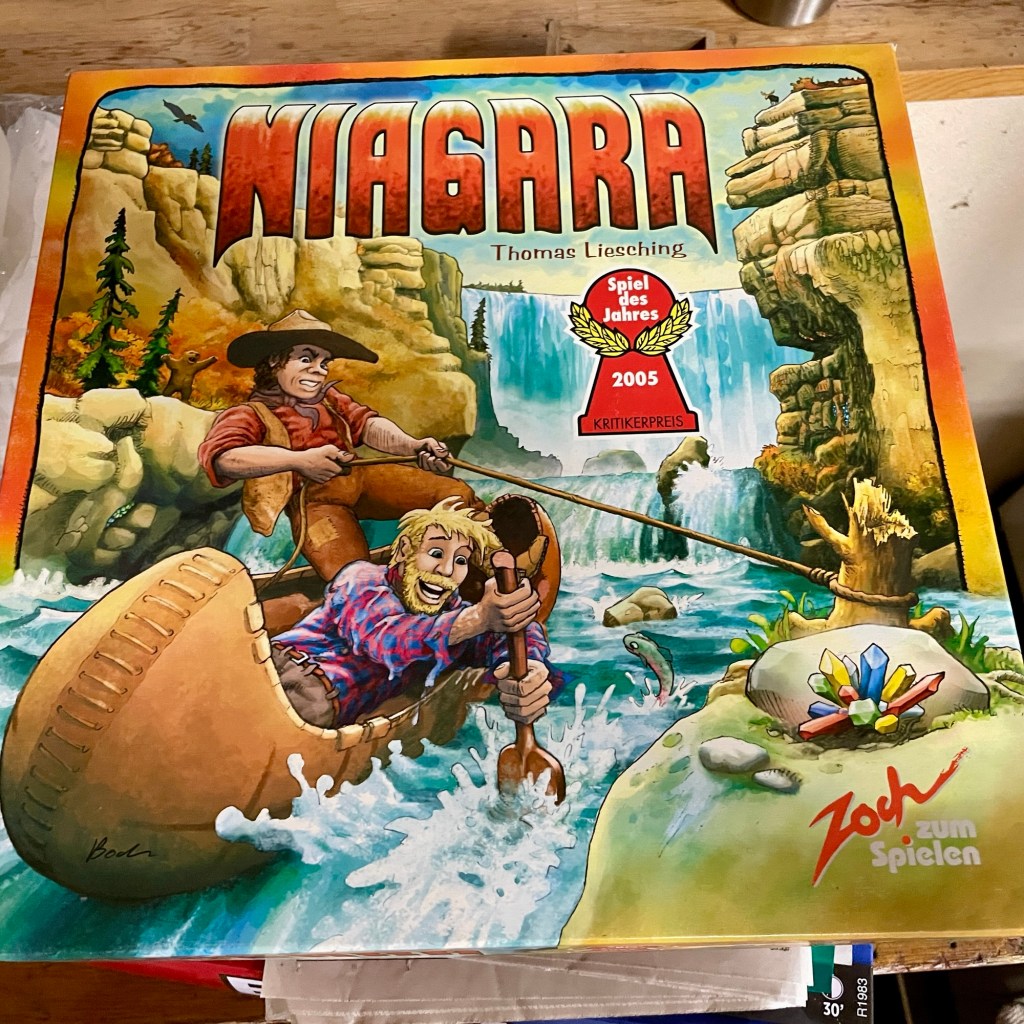
    The one they brought from Germany is called Niagara. As you can see it has a North America frontier adventure vibe.

    But in Germany the name is pronounced nee-ah-GAH-ra. It is actually how you might pronounce the word if it was Japanese.

  • Intermission

    Wednesday was the halfway point of our time at ARI. Sometimes it feels like we have been here a long time and sometimes just a few days. Long-term volunteers (those serving at least two months) get two days off for each month, and this weekend we took two days off to make a four-day holiday.

    We went to Tokyo and from there made a day trip to Mt. Fuji. We stayed in the lively Shinjuku area at a hotel notable for Godzilla climbing on it.

    Our hotel was easy to spot.
    Even the hotel elevators were dangerous.

    We saw two movies at the multiplex in the same building as the hotel – One Battle After Another and Kokuho (with English subtitles). Kokuho is Japan’s submission for Best International Feature Film in the next Academy Awards. 10/10 would recommend both.

    We did a lot of hiking around Mt. Fuji and actually some saw of it at the end of day.

    Mt. Fuji.
    Mt. Fuji is supposed to be a dramatic backdrop but it was clouded over when we visited this pagoda.
    Samurai hiker.

    We did some needed shopping, saw some sights, and ate some good meals.

    Shinjuku Gyoen National Garden
    Nagi ramen shop. Ten seats and a line to get in down the alley.
    Tokyo as far as the eye can see, and much further.

    It was a nice respite, but it also was nice to get back to the quiet country of ARI.

  • “At least they died as Christians ….”

    This morning 75 ARI chickens met their maker. Next week is the annual Harvest Thanksgiving Celebration, or HTC (more on that to come in another post), and the ARI community will be preparing an international menu of food for our guests from the area.

    Scott is on the HTC Food Committee. The committee did the math and determined that all the dishes would require a total of 75 chickens. The committee also decided that October 7 would be Chicken Butchering Day – a day that will long live in Scott’s memory.

    Uncle Timo is in charge of ARI’s chickens. He took charge of slaughtering them, then the committee members took over. There is an ingenious and somewhat terrifying contraption that removes most of the feathers. The rest of the feathers needed to be removed by hand.

    Then the butchering began. Scott had never butchered a chicken, or anything else for that matter. The closest has been carving a Thanksgiving turkey. Fortunately Kenwang was at the next station and showed Scott what to do, then patiently answered his questions as they went along. Scott learned more about chicken anatomy than he ever wanted, to be honest. Off came the head and feet, then out came the innards. We keep the head, feet, and many of the innards. The rest goes into the ARI compost, which itself is a thing to behold.

    We will stop the chicken-deconstruction description there, and mercifully there are no pictures (you are welcome, Joy). There was, however, a film maker who shot video of the whole thing, and frankly it seemed like he took waaaay more video than necessary to show chickens being butchered. But what do we know about film making?

    The whole thing took a couple of hours, including cleanup. You cannot imagine the mess. Then we went to lunch. Lunch was vegetarian (whew).

    Oh, and about the post title. Our chicken wrangler Uncle Timo also is the head of the local Otawara Christian Church (more on that to come in another post). Folks in the butchering room were joking with Uncle Timo about whether he had baptized the chickens (at one point they go into a hot bath) and he joked yes, “at least they died as Christians.”

  • Quaking

    There was an earthquake last night. Japan is earthquake country, so that is not unusual.

    Many buildings at ARI had to be rebuilt after the Great Eastern Japan Earthquake in 2011. And part of our orientation was what to do when there is an earthquake. The short version – if an earthquake lasts at least 1 minute then evacuate to the appointed outside location. (We do wonder who has the presence of mind to time an earthquake.) The key is to get out of any building immediately, because the aftershock is what likely will cause the most damage. Or the really short version – do whatever the Japanese do, because they have been doing this their entire lives.

    The evacuation location.

    Last night’s earthquake at 12:20 probably lasted about 20 seconds, we reckoned. So nothing to worry about (if you are Japanese). But it was strong enough to shake our beds back and forth. We wonder if we would have been knocked off balance if it had been during the day.

    Disaster procedures.